
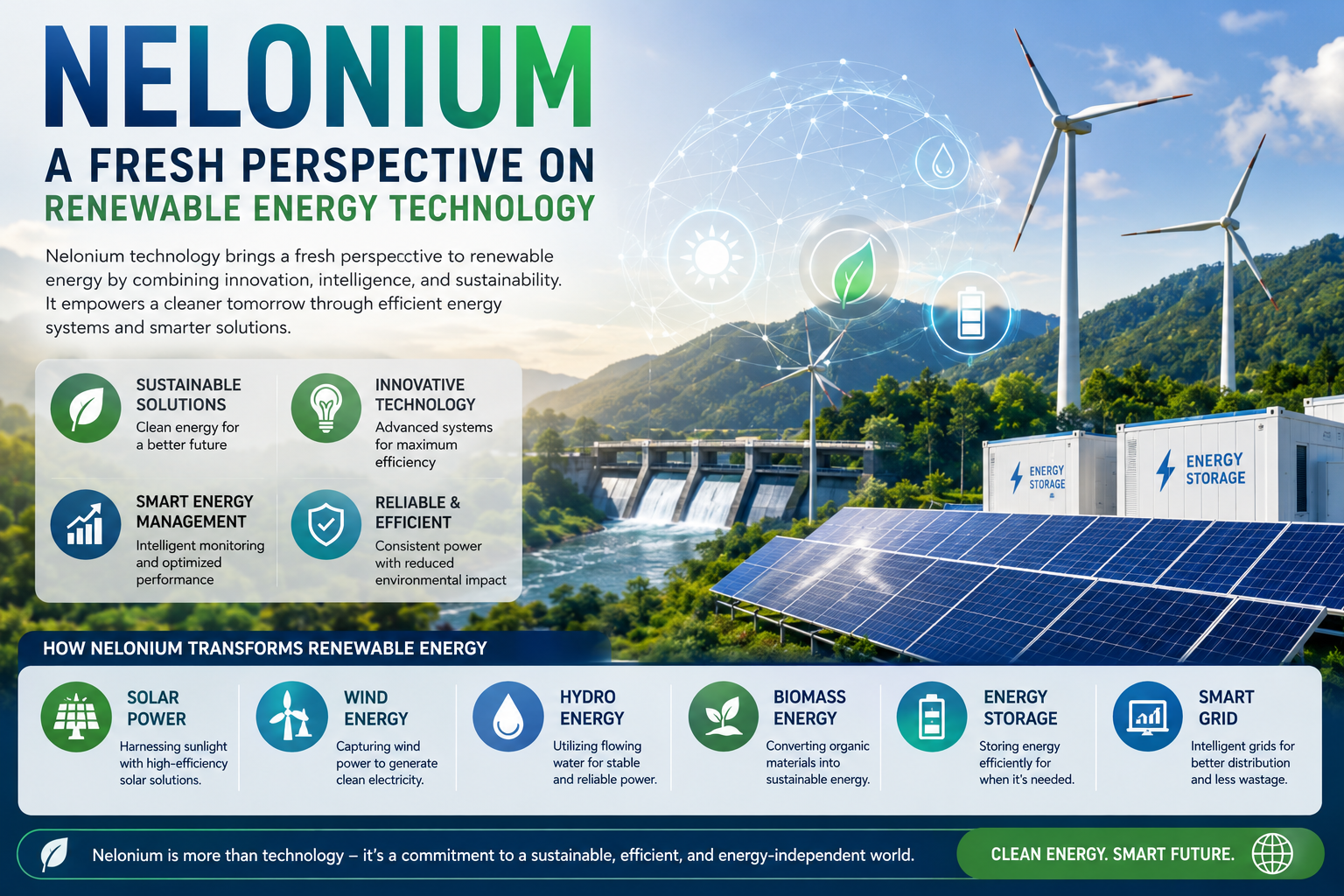
Renewable energy has become one of the most significant drivers of global sustainability, encouraging industries and governments to seek cleaner alternatives to fossil fuels. Among emerging concepts, nelonium represents a forward-thinking approach that combines innovative engineering, smart energy management, and environmentally conscious design to improve renewable power systems. By integrating advanced technologies with sustainable practices, nelonium aims to maximize energy efficiency while reducing environmental impact. As societies continue transitioning toward cleaner energy sources, this concept offers valuable insights into how future energy systems can become more reliable, accessible, and adaptable.
The growing demand for electricity, combined with increasing awareness of climate change, has accelerated the development of renewable energy technologies. Solar panels, wind turbines, hydroelectric systems, and bioenergy facilities have already transformed the global energy landscape. However, continuous innovation remains essential for improving efficiency, reducing operational costs, and ensuring stable power generation. Nelonium contributes to this vision by emphasizing intelligent energy solutions capable of supporting long-term sustainability.
Understanding Nelonium in Renewable Energy
The concept of nelonium reflects a modern perspective on renewable energy innovation rather than focusing solely on individual technologies. It highlights the importance of integrating multiple renewable resources into coordinated systems that optimize energy production and consumption.
Traditional power generation often depends on centralized facilities that distribute electricity over long distances. Renewable energy systems, however, increasingly rely on decentralized networks where energy can be produced closer to consumers. Nelonium supports this transition by encouraging flexible energy infrastructure that can respond to changing environmental conditions and electricity demands.
By combining renewable resources with intelligent monitoring systems, advanced storage technologies, and efficient energy management strategies, this approach seeks to improve reliability while minimizing energy losses.
The Growing Importance of Sustainable Energy
Global energy consumption continues to rise as populations grow and economies expand. Meeting this demand without increasing greenhouse gas emissions requires continuous investment in renewable technologies and innovative management systems.
Nelonium encourages a comprehensive approach that extends beyond electricity generation. It recognizes that energy storage, intelligent distribution, digital monitoring, and consumer participation all contribute to a successful renewable energy ecosystem.
As renewable technologies become more affordable, communities can benefit from cleaner air, improved energy security, and greater independence from conventional fuel sources. These advantages make sustainable energy an increasingly attractive option for governments, industries, and households alike.
How Nelonium Supports Renewable Energy Innovation
Innovation plays a central role in improving renewable energy performance. Nelonium emphasizes combining emerging technologies with practical implementation strategies that maximize efficiency while maintaining environmental responsibility.
Smart sensors, artificial intelligence, predictive maintenance, digital monitoring platforms, and automated energy management systems enable renewable facilities to operate more effectively. These technologies help identify equipment issues early, optimize electricity production, and reduce unnecessary maintenance costs.
The integration of digital intelligence with renewable infrastructure also improves grid stability by balancing energy supply and demand more efficiently.
Environmental Benefits of Nelonium
One of the strongest advantages associated with renewable energy innovation is its potential to reduce environmental impact. Cleaner electricity generation helps decrease greenhouse gas emissions while supporting global efforts to address climate change.
Nelonium encourages efficient resource utilization by promoting renewable energy sources that naturally replenish themselves. Solar radiation, wind, flowing water, and biological materials provide sustainable alternatives to finite fossil fuel reserves.
Improved efficiency also reduces unnecessary energy losses throughout production and distribution. As renewable technologies continue advancing, overall environmental performance is expected to improve further, contributing to healthier ecosystems and more sustainable communities.
The Role of Nelonium in Modern Renewable Energy Systems
Renewable energy systems have evolved significantly over the past decade, moving from isolated power generation facilities to interconnected networks that communicate in real time. Nelonium reflects this evolution by promoting technologies that improve coordination between renewable resources, storage solutions, and energy consumers. Instead of relying on a single power source, modern energy systems can combine solar, wind, hydroelectric, and biomass generation to create a balanced and dependable electricity supply.
As weather conditions change throughout the day, renewable energy production naturally fluctuates. Intelligent energy management systems inspired by the principles of nelonium help maintain a stable power supply by automatically adjusting generation, storing surplus electricity, and distributing energy where it is needed most. This adaptability improves overall system reliability while reducing dependence on conventional backup power plants.
The ability to coordinate multiple renewable technologies makes energy infrastructure more resilient and capable of meeting growing electricity demands without increasing environmental impact.
Nelonium and Smart Grid Technology
Smart grids have become one of the most important developments in the renewable energy industry. Unlike traditional electrical grids, which mainly deliver electricity in one direction, smart grids allow two-way communication between power producers and consumers. Nelonium supports this transformation by encouraging intelligent energy networks that respond dynamically to changing conditions.
Smart grids collect information from sensors, digital meters, renewable power stations, and storage facilities. Advanced software analyzes this information to optimize electricity distribution, improve efficiency, and reduce energy waste. Consumers also benefit because they gain greater visibility into their energy usage and can adjust consumption during periods of high demand.
This combination of renewable generation and digital intelligence creates a more flexible energy system capable of supporting future technological advancements.
Table: Features of Smart Grids with Nelonium
| Smart Grid Feature | Function | Benefit |
|---|---|---|
| Digital Monitoring | Tracks electricity flow | Improved efficiency |
| Automated Controls | Balances supply and demand | Stable power distribution |
| Smart Meters | Records energy usage | Better consumer awareness |
| Renewable Integration | Connects multiple energy sources | Cleaner electricity generation |
| Predictive Analytics | Forecasts demand | Reduced operational costs |
| Remote Management | Controls equipment digitally | Faster system response |
The integration of these technologies demonstrates how modern renewable systems become more intelligent, efficient, and sustainable.
Energy Storage and Nelonium Innovation
One of the greatest challenges facing renewable energy is the intermittent nature of certain power sources. Solar panels generate electricity only when sunlight is available, while wind turbines depend on suitable wind conditions. Nelonium addresses this challenge by emphasizing efficient energy storage technologies that preserve excess electricity for later use.
Modern battery systems, pumped hydro storage, compressed air facilities, and emerging storage technologies help stabilize renewable power generation. During periods of high electricity production, surplus energy is stored instead of being wasted. When renewable generation decreases, stored electricity supplies homes, businesses, and industries without interruption.
Efficient storage systems improve energy reliability while allowing renewable resources to meet a larger share of total electricity demand.
Economic Benefits of Nelonium Technology
The transition toward renewable energy provides significant economic opportunities alongside environmental advantages. Investments in sustainable infrastructure create employment, stimulate technological innovation, and encourage the development of new industries. Nelonium supports economic growth by promoting efficient energy systems that reduce operational expenses while increasing long-term productivity.
Renewable energy facilities often require lower fuel costs than conventional power plants because sunlight, wind, and water are naturally available resources. As technologies continue improving, installation costs have gradually decreased, making renewable electricity increasingly competitive with traditional energy sources.
Businesses also benefit from greater energy efficiency, reduced maintenance requirements, and improved operational reliability, all of which contribute to stronger financial performance over time.
Table: Economic Advantages of Nelonium
| Economic Area | Positive Outcome | Long-Term Benefit |
|---|---|---|
| Energy Efficiency | Reduced operating costs | Higher profitability |
| Renewable Infrastructure | Increased investment | Economic development |
| Technology Innovation | New business opportunities | Industrial growth |
| Employment | Skilled workforce demand | Job creation |
| Energy Independence | Reduced fuel imports | Greater economic stability |
| Sustainable Development | Long-term planning | Stronger future resilience |
These economic benefits illustrate why renewable innovation continues attracting attention from governments, investors, and private organizations worldwide.
Industrial Applications of Nelonium
Industries consume large amounts of electricity, making them important participants in the transition toward renewable energy. Manufacturing facilities, processing plants, logistics centers, and commercial buildings increasingly adopt sustainable technologies to reduce emissions and improve operational efficiency.
Nelonium encourages industrial organizations to integrate renewable power generation with advanced monitoring systems that optimize equipment performance. Automated controls can reduce unnecessary electricity consumption while predictive maintenance minimizes unexpected equipment failures.
Industrial facilities also benefit from energy storage technologies that help balance electricity demand during periods of peak production. These improvements reduce operational risks while supporting environmental sustainability and long-term competitiveness.
Renewable Energy Sources Enhanced by Nelonium
The future of renewable energy depends on combining multiple clean energy resources into a coordinated system that delivers reliable electricity throughout the year. Nelonium promotes this integrated approach by supporting technologies that improve the efficiency and compatibility of various renewable energy sources. Rather than relying on a single method of power generation, energy providers can create balanced systems that respond to seasonal and environmental changes.
Solar energy remains one of the fastest-growing renewable resources because photovoltaic panels can be installed on homes, businesses, and utility-scale facilities. Wind energy complements solar production by generating electricity under different weather conditions, while hydroelectric systems provide dependable power through flowing water. Biomass and geothermal energy add further diversity, creating a stronger and more stable renewable energy network.
The combination of these resources helps reduce reliance on fossil fuels while improving overall energy security.
Table: Renewable Energy Sources and Their Benefits
| Renewable Source | Energy Generation Method | Primary Advantage |
|---|---|---|
| Solar Energy | Sunlight | Clean daytime electricity |
| Wind Energy | Air movement | Low operating emissions |
| Hydroelectric Power | Flowing water | Reliable continuous generation |
| Biomass Energy | Organic materials | Productive waste utilization |
| Geothermal Energy | Underground heat | Stable year-round output |
| Marine Energy | Ocean waves and tides | Additional renewable potential |
Integrating these resources through advanced energy management systems improves reliability while maximizing renewable power production.
Artificial Intelligence and Nelonium
Artificial intelligence has become an important component of modern renewable energy systems. Nelonium supports the use of intelligent software capable of analyzing large amounts of operational data, predicting equipment performance, and optimizing electricity generation in real time.
Machine learning algorithms evaluate weather forecasts, historical production data, electricity demand, and equipment conditions to improve decision-making. These systems help renewable facilities generate electricity more efficiently while reducing maintenance costs and minimizing unexpected failures.
Artificial intelligence also improves forecasting accuracy by predicting changes in sunlight, wind speed, and energy consumption. Better forecasting enables operators to prepare energy storage systems and maintain a stable electricity supply even when renewable generation fluctuates.
The combination of renewable technologies and artificial intelligence creates a smarter, more responsive energy infrastructure capable of supporting growing global energy needs.
Environmental Sustainability Through Nelonium
Protecting the environment remains one of the primary motivations behind renewable energy development. Nelonium emphasizes sustainable practices that minimize ecological impact while maximizing energy efficiency. Cleaner electricity generation reduces greenhouse gas emissions, decreases air pollution, and supports global efforts to slow climate change.
Renewable technologies also reduce dependence on finite natural resources such as coal, oil, and natural gas. By using naturally replenished energy sources, future generations can benefit from a more secure and environmentally responsible energy system.
Sustainable infrastructure extends beyond electricity production. Efficient manufacturing processes, recyclable materials, responsible land management, and environmentally friendly construction methods all contribute to the long-term success of renewable energy projects.
Table: Environmental Contributions of Nelonium
| Sustainability Area | Positive Contribution | Long-Term Impact |
|---|---|---|
| Carbon Emission Reduction | Cleaner electricity | Improved air quality |
| Renewable Resource Utilization | Sustainable energy production | Conservation of natural resources |
| Efficient Energy Management | Reduced waste | Higher system efficiency |
| Smart Infrastructure | Optimized resource use | Lower environmental footprint |
| Green Technology Development | Cleaner innovation | Sustainable economic growth |
| Resource Conservation | Reduced fossil fuel dependency | Environmental protection |
Challenges Facing Nelonium Technology
Although renewable energy continues expanding worldwide, several challenges remain. Initial infrastructure investment, technological complexity, energy storage limitations, and regulatory requirements can influence the speed of implementation. Nelonium recognizes these challenges while encouraging continuous research, technological improvement, and collaboration among governments, industries, and research institutions.
Weather variability remains another important consideration because renewable resources naturally depend on environmental conditions. Advanced forecasting systems, energy storage technologies, and diversified renewable portfolios help reduce these limitations while maintaining consistent electricity generation.
Public awareness and workforce development also play important roles. Engineers, technicians, researchers, and policymakers must continue developing the knowledge and skills required to design, operate, and maintain increasingly sophisticated renewable energy systems.
Global Adoption of This Platform Principles
Countries around the world are investing heavily in renewable energy infrastructure as part of their long-term sustainability strategies. Governments encourage clean energy development through supportive policies, research funding, and investments in modern electrical grids. Nelonium aligns with these global efforts by promoting efficient technologies that strengthen renewable energy systems while supporting environmental responsibility.
International collaboration accelerates innovation by allowing researchers and industries to exchange knowledge, develop new technologies, and establish best practices. Universities, private companies, and public organizations increasingly work together to improve renewable energy performance and reduce implementation costs.
As renewable energy becomes more accessible, communities benefit from cleaner environments, improved energy security, and stronger economic opportunities. The widespread adoption of innovative approaches such as nelonium contributes to a more sustainable global energy future.
The Future Potential of This Platform
As renewable energy technologies continue to evolve, nelonium represents a vision of smarter, cleaner, and more efficient power systems. Future energy networks are expected to combine renewable generation, advanced battery storage, artificial intelligence, and digital communication into fully integrated ecosystems. These systems will not only produce electricity but also analyze consumption patterns, predict maintenance requirements, and automatically optimize energy distribution.
The growing adoption of electric vehicles, smart homes, and intelligent manufacturing facilities increases the demand for renewable electricity that is both reliable and sustainable. Nelonium supports this transformation by encouraging innovations that improve grid flexibility and maximize renewable resource utilization. As technology advances, renewable energy systems will become increasingly capable of meeting global energy demands while reducing environmental impact.
Researchers continue exploring advanced materials, high-capacity batteries, hydrogen energy storage, and next-generation photovoltaic technologies that can further improve renewable efficiency. These developments demonstrate how continuous innovation remains essential for achieving long-term sustainability goals.
This Platfrom and Energy Efficiency
Energy efficiency is one of the most valuable components of any renewable energy strategy. Producing clean electricity is important, but using that electricity wisely creates even greater environmental and economic benefits. Nelonium promotes intelligent energy management systems that reduce unnecessary consumption while maintaining reliable performance.
Modern buildings increasingly use smart lighting, automated climate control, intelligent appliances, and energy monitoring software to minimize electricity waste. Industrial facilities adopt advanced production technologies that improve operational efficiency while reducing emissions. These improvements contribute to lower operating costs and greater environmental sustainability.
Energy-efficient systems also reduce pressure on electrical grids by decreasing peak demand. When combined with renewable generation and energy storage, efficient consumption supports a more balanced and resilient energy infrastructure.
Table: Energy Efficiency Applications
| Application | Efficiency Improvement | Benefit |
|---|---|---|
| Smart Homes | Automated energy control | Lower electricity consumption |
| Commercial Buildings | Intelligent lighting and HVAC | Reduced operational expenses |
| Manufacturing | Optimized production equipment | Higher productivity |
| Data Centers | Advanced cooling technologies | Reduced power usage |
| Transportation | Electric mobility solutions | Lower fuel dependence |
| Agriculture | Smart irrigation and automation | Efficient resource utilization |
Conclusion
Renewable energy has become an essential part of global efforts to create a cleaner, more sustainable future. Nelonium represents a forward-looking approach that combines renewable power generation with intelligent technologies, efficient energy management, and environmentally responsible practices. By integrating solar, wind, hydroelectric, biomass, and emerging renewable resources with smart grids, artificial intelligence, and advanced energy storage, this concept supports the development of reliable and resilient energy systems.