
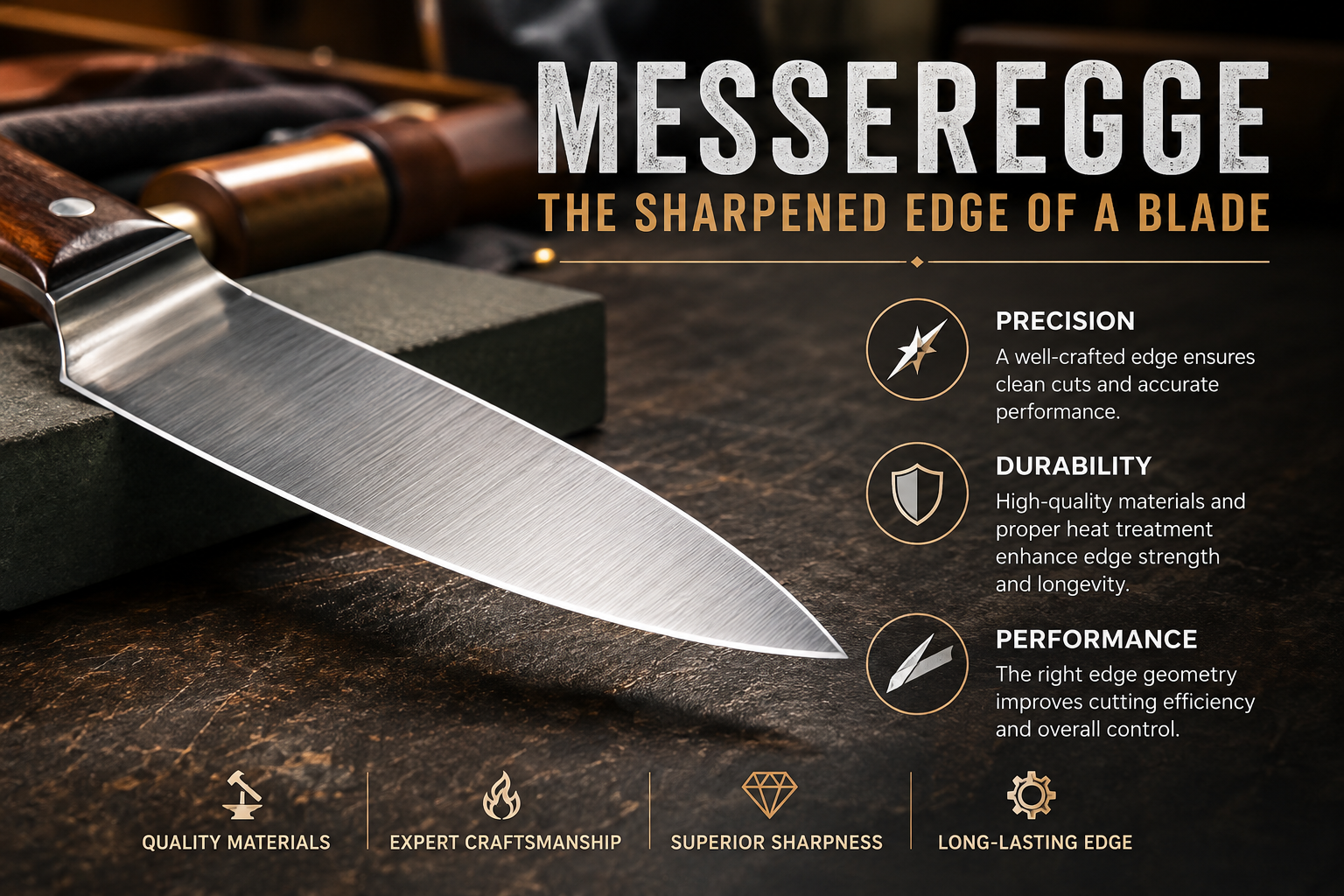
The term messeregge refers to the sharpened edge of a blade that is specifically designed for cutting, slicing, or carving different materials with precision. Although blades come in many shapes and sizes, the cutting edge remains the most critical component because it directly determines efficiency, durability, and performance. Whether found in kitchen knives, industrial cutting tools, woodworking equipment, surgical instruments, or outdoor survival gear, the sharpened edge is responsible for transforming force into an effective cutting action. Understanding how a blade edge functions helps users appreciate the engineering, craftsmanship, and maintenance practices that contribute to its long-term performance. Modern metallurgy and manufacturing have significantly improved blade technology, allowing cutting edges to remain sharper for longer while resisting wear and corrosion.
The Meaning and History of messeregge
The concept behind messeregge dates back thousands of years to the earliest civilizations that shaped stone tools for hunting and survival. Early humans discovered that creating a fine edge on rocks greatly improved their ability to process food, build shelters, and craft tools. As civilizations advanced, bronze and iron replaced stone, allowing sharper and stronger cutting edges to emerge.
The development of steel revolutionized blade production because steel offered greater hardness and durability than previous materials. Blacksmiths across Europe, Asia, and the Middle East refined heat treatment techniques that produced stronger blades capable of maintaining sharp edges through repeated use. Today’s cutting tools continue to benefit from centuries of innovation in metallurgy, precision grinding, and engineering.
| Historical Era | Primary Blade Material | Major Advancement |
|---|---|---|
| Stone Age | Flint and Obsidian | Primitive cutting edges |
| Bronze Age | Bronze | Improved durability |
| Iron Age | Iron | Stronger cutting tools |
| Medieval Period | Carbon Steel | Better heat treatment |
| Modern Era | Stainless Steel and Advanced Alloys | Precision engineering and corrosion resistance |
Blade Anatomy and the Role of messeregge
Every blade consists of multiple structural components that work together to create efficient cutting performance. While handles provide grip and control, and the spine offers structural support, the sharpened edge performs the actual cutting process.
The angle of the cutting edge significantly influences performance. Narrow angles generally create exceptionally sharp blades capable of precise slicing, while wider angles improve strength and durability for heavier cutting tasks. Manufacturers carefully balance these characteristics depending on the intended purpose of the blade.
The microscopic structure of the edge also plays a vital role. Under magnification, even polished edges contain tiny teeth that assist in cutting by concentrating force onto extremely small contact points.
| Blade Component | Function |
|---|---|
| Spine | Provides structural strength |
| Edge | Performs cutting |
| Tip | Enables precision work |
| Heel | Handles heavier cuts |
| Tang | Connects blade to handle |
Materials Used to Produce High-Quality messeregge
Material selection largely determines the performance of a cutting edge. Different steels and alloys provide unique combinations of hardness, corrosion resistance, flexibility, and ease of sharpening.
Carbon steel has long been valued for achieving exceptional sharpness. Although it requires regular maintenance to prevent rust, many professionals appreciate its cutting performance. Stainless steel introduced greater corrosion resistance, making it ideal for kitchen environments and humid conditions.
Powder metallurgy has further advanced blade manufacturing by creating steels with extremely fine grain structures. These premium materials combine toughness, wear resistance, and edge retention while reducing brittleness.
Ceramic blades represent another technological innovation. Manufactured from zirconium oxide, ceramic cutting edges remain sharp for extended periods but require careful handling due to their brittle nature.
| Material | Advantages | Limitations |
|---|---|---|
| Carbon Steel | Excellent sharpness | Rusts without care |
| Stainless Steel | Corrosion resistant | Slightly lower edge retention |
| Tool Steel | High durability | Requires maintenance |
| Powder Steel | Outstanding performance | Higher cost |
| Ceramic | Extremely sharp | Brittle |
Manufacturing Techniques Behind messeregge
Creating a high-performance cutting edge requires multiple carefully controlled manufacturing processes. Modern factories combine traditional craftsmanship with computer-controlled machinery to achieve exceptional precision.
Forging remains one of the oldest manufacturing methods. During forging, heated steel is shaped under pressure, aligning its grain structure for improved strength. Many premium knives continue to use forged construction because of its durability and balance.
Stock removal has become increasingly common with modern machining technology. Manufacturers cut blade profiles from steel sheets before grinding the bevels that eventually form the cutting edge.
Heat treatment follows shaping and plays a crucial role in determining blade hardness. Controlled heating and cooling cycles alter the internal crystal structure of steel, allowing manufacturers to balance hardness with toughness.
After heat treatment, precision grinding machines create the final edge geometry. Automated polishing systems then refine the edge until it achieves the desired cutting performance.
Blade Geometry and Cutting Performance
The geometry of a blade determines how efficiently it cuts different materials. Blade thickness, bevel angle, edge profile, and overall shape all contribute to cutting behavior.
Flat grinds provide excellent slicing performance by reducing friction during cutting. Hollow grinds create extremely sharp edges suited for fine precision work, while convex grinds increase durability for demanding outdoor tasks.
Edge thickness also affects performance. Thin edges pass through soft materials with minimal resistance, whereas thicker edges withstand impacts encountered during chopping or heavy-duty work.
Engineers frequently use computer simulations to optimize blade geometry before manufacturing begins. These digital models allow designers to evaluate stress distribution, cutting efficiency, and durability under different conditions, leading to better-performing blades across a wide range of applications.
Sharpening Techniques That Preserve messeregge
Maintaining a sharp messeregge requires consistent sharpening using techniques that match the blade material and intended application. Sharpening is not simply removing metal; it is the controlled restoration of the blade’s cutting geometry. Every sharpening session should aim to recreate the original edge angle while removing only the minimum amount of material necessary.
Traditional whetstones remain among the most respected sharpening tools because they offer excellent control over the sharpening process. Available in coarse, medium, and fine grits, these stones allow users to reshape damaged edges before polishing them to a razor-like finish. Water stones cut quickly and produce exceptionally refined edges, whereas oil stones are known for their durability and slower wear.
Diamond sharpening plates have become increasingly popular because industrial diamonds easily abrade even the hardest modern steels. They require minimal maintenance and remain flat over years of use. Ceramic sharpening rods, on the other hand, are often used for routine edge refinement rather than complete sharpening.
Electric sharpeners provide convenience by maintaining consistent sharpening angles through guided abrasive wheels. While they are suitable for household knives, professional craftsmen often prefer manual methods because they provide greater precision and reduce unnecessary material removal.
Leather strops represent the final stage of sharpening. After grinding, the blade is drawn across leather treated with polishing compounds. This process removes microscopic burrs and aligns the cutting edge, resulting in smoother cutting performance.
| Sharpening Method | Best Application | Main Advantage |
|---|---|---|
| Water Stone | Kitchen and professional knives | Extremely fine edge |
| Oil Stone | Traditional sharpening | Long-lasting surface |
| Diamond Plate | Hard steels | Fast metal removal |
| Ceramic Rod | Routine maintenance | Quick edge refinement |
| Leather Strop | Final polishing | Razor-sharp finish |
Factors That Affect the Lifespan of messeregge
Several environmental and operational factors influence how long a cutting edge remains effective. Understanding these variables allows users to maximize blade performance while reducing maintenance costs.
Blade hardness is perhaps the most important factor. Harder steels generally maintain sharpness longer because they resist deformation during cutting. However, excessive hardness may reduce toughness, making the edge more susceptible to chipping under heavy impacts.
The material being cut also affects edge retention. Soft foods place minimal stress on the blade, whereas cutting rope, cardboard, hardwood, or abrasive synthetic materials accelerates wear. Industrial applications involving continuous cutting cycles require specially engineered blade materials capable of resisting friction and heat.
Improper cutting surfaces significantly shorten blade life. Wooden and plastic cutting boards help preserve sharpness, while glass, ceramic, granite, or metal surfaces quickly dull even premium blades.
Environmental exposure should also be considered. Moisture, salt, acids, and certain chemicals contribute to corrosion, particularly in high-carbon steels. Regular cleaning and proper storage minimize these risks and help preserve the cutting edge.
Applications of messeregge Across Different Industries
The importance of messeregge extends far beyond household kitchens. Nearly every industry that relies on cutting, trimming, shaping, or processing materials depends upon well-engineered blade edges.
In culinary environments, chefs rely on finely sharpened knives for preparing vegetables, meat, seafood, bread, and delicate garnishes. Precision cutting improves presentation while reducing food waste and increasing efficiency.
The woodworking industry uses chisels, carving knives, planes, and specialty cutting tools that require durable edges capable of producing smooth finishes on hardwoods and softwoods alike.
Medical professionals depend upon surgical scalpels manufactured to extremely tight tolerances. These blades require exceptional sharpness to perform delicate procedures while minimizing tissue trauma.
Agriculture also depends heavily on sharpened blades. Harvesting equipment, pruning shears, grafting knives, and mechanized cutters all benefit from optimized cutting edges that improve productivity and reduce plant damage.
Manufacturing industries employ countless cutting tools in machining, metal fabrication, packaging, and textile production. High-speed industrial blades must maintain consistent performance while operating continuously under demanding conditions.
| Industry | Typical Cutting Tool | Primary Function |
|---|---|---|
| Culinary | Chef’s Knife | Food preparation |
| Medical | Scalpel | Surgical procedures |
| Agriculture | Pruning Knife | Plant maintenance |
| Woodworking | Chisel | Wood shaping |
| Manufacturing | Industrial Blade | Material processing |
The Science Behind Edge Retention
Edge retention refers to the ability of a blade to remain sharp during extended use. Modern materials science has revealed that numerous microscopic factors influence how well a blade maintains its cutting ability.
Steel consists of iron combined with carbon and additional alloying elements such as chromium, vanadium, molybdenum, cobalt, and tungsten. These elements form microscopic carbides that reinforce the cutting edge and resist abrasive wear.
Grain size also plays a significant role. Fine-grained steels allow manufacturers to create thinner, more stable edges capable of achieving remarkable sharpness without sacrificing durability. Powder metallurgy has dramatically improved grain uniformity, making today’s premium steels significantly more capable than earlier generations.
Heat treatment further influences performance by balancing hardness and toughness. Properly tempered blades maintain sharp edges while resisting fractures caused by impacts or twisting forces.
Engineers frequently evaluate blade performance using laboratory wear tests that simulate thousands of cutting cycles under controlled conditions. These studies help manufacturers develop improved alloys and optimized heat-treatment processes for specific applications.
Proper Maintenance Practices for messeregge
Consistent maintenance greatly extends blade life and ensures reliable cutting performance. After each use, blades should be cleaned with mild soap and warm water before being thoroughly dried. Prolonged exposure to moisture encourages corrosion, especially in carbon steel blades.
Storage methods are equally important. Knife blocks, magnetic strips, protective sheaths, and blade guards prevent accidental impacts that may chip or dull the edge. Loose storage inside drawers often causes unnecessary damage through repeated contact with other utensils.
Regular honing should not be confused with sharpening. Honing straightens microscopic edge deformations that occur during normal use without removing significant amounts of metal. Performing this simple maintenance task frequently delays the need for complete sharpening.
Applying food-safe mineral oil to carbon steel blades creates a protective barrier against moisture and oxidation. This practice is especially beneficial for collectors and users who store knives for extended periods.
Professional inspection can also identify small chips, cracks, or uneven wear before they develop into larger problems requiring extensive repairs.
Safety Considerations When Using Sharpened Blades
A properly maintained messeregge is actually safer than a dull blade because it requires less force to complete each cut. Reduced cutting force lowers the likelihood of slipping and accidental injuries.
Users should always maintain stable hand positions while cutting and keep fingers away from the blade’s path. Appropriate cutting boards provide secure support and minimize blade movement during use.
Protective equipment becomes increasingly important in industrial settings where workers operate high-speed cutting machinery. Safety gloves, protective eyewear, machine guards, and proper training significantly reduce workplace accidents.
Regular blade inspection also contributes to safety. Damaged or chipped edges may behave unpredictably during cutting and should be repaired or replaced before continued use.
Future Innovations in messeregge Technology
The future of messeregge is being shaped by rapid advancements in materials science, precision engineering, and manufacturing automation. Researchers continue developing steels and composite materials that deliver greater hardness without sacrificing toughness. These innovations enable cutting edges to remain sharper for longer periods while resisting corrosion, chipping, and wear.
Nanotechnology is beginning to influence blade production by improving surface coatings that reduce friction during cutting. Advanced coatings such as titanium nitride, diamond-like carbon (DLC), and ceramic composites increase durability while protecting blades from oxidation and abrasion. These technologies are already common in industrial machining tools and are gradually appearing in premium consumer knives.
Artificial intelligence is also transforming manufacturing processes. Smart production systems monitor grinding angles, heat-treatment temperatures, and polishing consistency in real time, ensuring each blade meets strict quality standards. Automated inspection systems using laser measurement and computer vision further improve manufacturing accuracy.
Three-dimensional printing has introduced new possibilities for producing specialized cutting tools. Although complete metal blades still require additional finishing, additive manufacturing allows engineers to create complex internal structures that were previously impossible using conventional techniques.
Environmental Sustainability in Blade Manufacturing
Sustainability has become an increasingly important consideration in modern blade production. Manufacturers are seeking methods that reduce energy consumption, minimize waste, and increase recycling throughout the manufacturing process.
Many steel producers now incorporate recycled metals into new alloys without compromising quality. Recycling reduces the need for raw material extraction while lowering greenhouse gas emissions associated with mining and processing.
Some manufacturers are replacing hazardous polishing compounds with environmentally friendly alternatives that produce fewer harmful emissions. Improved production planning also reduces scrap rates by maximizing material utilization during cutting and machining operations.
Consumers contribute to sustainability by maintaining blades properly instead of replacing them frequently. A well-maintained cutting tool can remain functional for decades, reducing unnecessary manufacturing demand and material waste.
| Sustainability Practice | Environmental Benefit |
|---|---|
| Recycled Steel | Conserves natural resources |
| Water Recycling | Reduces water consumption |
| Efficient Heat Treatment | Saves energy |
| Durable Blade Design | Extends product lifespan |
| Proper User Maintenance | Minimizes replacement waste |
Choosing the Right Blade with an Effective messeregge
Selecting the appropriate blade depends on its intended purpose rather than simply choosing the sharpest available option. Different cutting tasks require different edge geometries, steel compositions, and blade profiles.
Kitchen users typically benefit from stainless-steel blades because they resist corrosion and require relatively little maintenance. Professional chefs may prefer high-carbon steel for its exceptional sharpness despite the additional care it requires.
Outdoor enthusiasts often select survival knives with thicker edges capable of handling chopping, carving, and heavy-duty tasks. These blades prioritize toughness over extremely fine slicing performance.
Woodworkers usually choose specialized chisels and carving tools with carefully controlled bevel angles that maximize precision. Industrial operations frequently invest in premium alloy steels specifically engineered for continuous production environments.
Common Misconceptions About messeregge
Many myths surround blade sharpness and cutting performance. One common misconception is that harder steel is always better. While hardness improves edge retention, excessive hardness may reduce impact resistance, making the blade more susceptible to chipping under heavy loads.
Another misunderstanding is that frequent sharpening damages blades. In reality, proper sharpening removes only minimal amounts of material while restoring optimal cutting performance. Neglecting sharpening often forces users to apply greater force, increasing both blade wear and safety risks.