
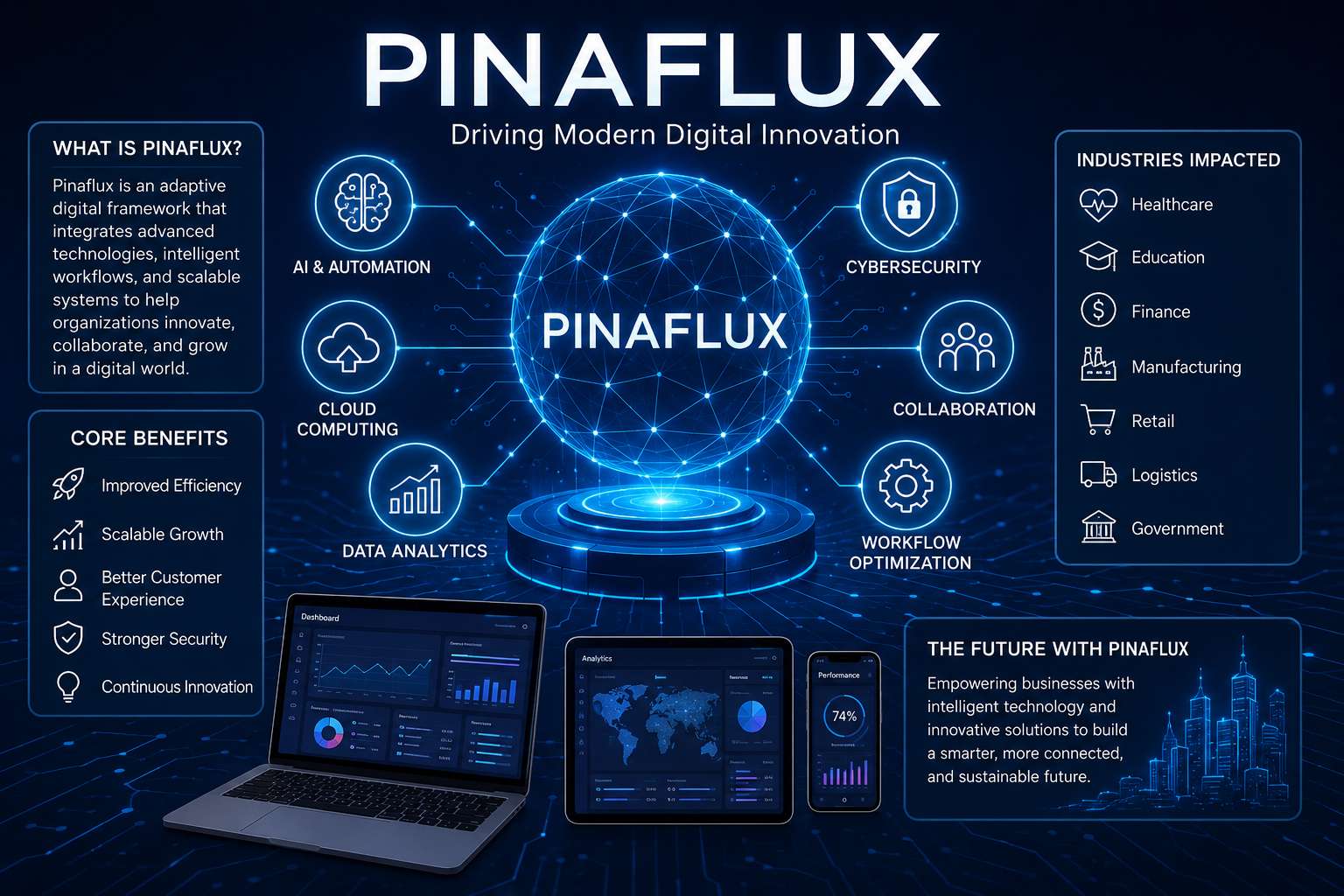
Pinaflux has emerged as a fascinating concept in discussions surrounding digital innovation, technological transformation, and intelligent business development. Although the term continues to evolve across different industries, it is increasingly associated with adaptable digital frameworks, seamless workflow optimization, and scalable technology solutions that enable organizations to respond effectively to changing market demands. As businesses pursue modernization and digital efficiency, understanding the principles behind Pinaflux offers valuable insight into how innovation can be implemented without sacrificing flexibility or long-term sustainability.
Digital transformation is no longer limited to adopting new software or automating repetitive tasks. Organizations now seek integrated ecosystems capable of connecting people, data, applications, and decision-making processes into a unified operational environment. Within this context, Pinaflux symbolizes an adaptive methodology that emphasizes continuous improvement, intelligent collaboration, and sustainable technological progress.
The significance of Pinaflux extends beyond corporate environments. Educational institutions, healthcare providers, manufacturing companies, financial organizations, logistics providers, and creative industries increasingly rely on adaptable digital systems that reflect many of the same principles commonly associated with this evolving concept. Rather than representing a single technology, it illustrates a broader philosophy focused on integration, flexibility, and innovation.
| Aspect | Description |
|---|---|
| Primary Focus | Digital innovation and adaptability |
| Core Objective | Improve efficiency and scalability |
| Key Advantage | Flexible technology integration |
| Common Applications | Business, education, healthcare, finance |
Understanding the Core Principles of Pinaflux
Understanding Pinaflux begins with recognizing that modern organizations operate within highly dynamic environments. Customer expectations evolve rapidly, technology advances continuously, and competitive markets require organizations to innovate without disrupting daily operations.
Instead of relying on rigid infrastructures, adaptive frameworks encourage organizations to build systems capable of evolving alongside technological advancements. Flexibility becomes one of the defining characteristics of successful digital ecosystems.
Another important principle involves intelligent connectivity. Information generated by one department should be accessible across multiple business units while maintaining appropriate security and governance standards. Such connectivity reduces duplication, improves decision-making, and creates more responsive organizational structures.
Automation also contributes significantly to the philosophy associated with Pinaflux. Rather than replacing human expertise, automation assists professionals by handling repetitive processes, allowing employees to dedicate greater attention to creativity, strategic planning, and customer engagement.
Scalability remains equally essential. Whether an organization serves hundreds of customers or millions of users worldwide, technological infrastructures should expand smoothly without requiring complete reconstruction. This long-term perspective encourages sustainable growth while minimizing unnecessary operational costs.
Historical Evolution of Pina flux
Every emerging digital concept develops alongside technological progress. The evolution of Pinaflux reflects broader changes occurring throughout the global technology landscape over several decades.
During the early years of digital transformation, organizations primarily focused on computerizing manual processes. Databases replaced filing cabinets, email replaced traditional correspondence, and enterprise software gradually connected previously isolated departments.
The growth of cloud computing introduced greater flexibility by enabling organizations to access computing resources on demand. This transition significantly reduced infrastructure limitations while encouraging more collaborative approaches to information management.
Artificial intelligence later expanded organizational capabilities by supporting predictive analytics, intelligent automation, recommendation systems, and advanced decision-support tools. These developments reinforced adaptive business models that continue influencing modern digital strategies.
Today, organizations increasingly combine cloud infrastructure, automation, cybersecurity, machine learning, data analytics, and collaborative software into unified ecosystems. Pinaflux reflects this integrated direction, emphasizing continuous improvement rather than isolated technological upgrades.
Why Pinaflux Matters in Digital Transformation
Digital transformation succeeds when organizations focus equally on technology, people, and operational processes. Pinaflux highlights the importance of balancing these interconnected components instead of prioritizing technology alone.
Organizations frequently encounter challenges when implementing digital initiatives because new systems fail to align with existing workflows. Adaptive implementation strategies reduce disruption while allowing gradual adoption across departments.
Improved collaboration represents another important benefit. Modern organizations depend on cross-functional communication involving marketing, finance, operations, customer support, and executive leadership. Connected digital environments encourage transparency while improving organizational responsiveness.
Decision-making also becomes increasingly data-driven. Instead of relying solely on historical reports, leaders gain access to real-time dashboards, predictive insights, and operational intelligence that support faster strategic decisions.
Customer experiences similarly improve through personalized services, faster response times, and consistent communication across multiple digital channels.
| Digital Area | Contribution of Pinaflux |
| Operations | Workflow optimization |
| Customer Service | Personalized engagement |
| Analytics | Real-time insights |
| Security | Integrated protection |
| Innovation | Continuous improvement |
Key Components That Define Pinaflux
Several interconnected elements contribute to the effectiveness of Pinaflux within digital environments.
Adaptive architecture enables organizations to introduce new technologies without replacing entire infrastructures. Modular systems simplify upgrades while reducing implementation risks.
Cloud-based accessibility allows employees to collaborate from multiple locations while maintaining secure access to organizational resources.
Data integration eliminates isolated information repositories by connecting multiple applications into centralized platforms.
Artificial intelligence supports intelligent recommendations, predictive forecasting, automated reporting, and personalized customer experiences.
Cybersecurity ensures that expanding digital ecosystems remain protected against evolving cyber threats through encryption, authentication, continuous monitoring, and proactive risk management.
Workflow automation streamlines repetitive administrative tasks, increasing productivity while reducing operational delays.
User-centered design emphasizes intuitive interfaces that improve adoption rates among employees and customers alike.
Applications of Pina flux Across Industries
Organizations across diverse industries increasingly benefit from adaptive digital ecosystems similar to those represented by Pinaflux.
Healthcare providers improve patient scheduling, electronic health records, remote consultations, and diagnostic support through integrated digital platforms.
Educational institutions expand online learning environments, personalized educational experiences, digital assessments, and collaborative teaching resources.
Manufacturing companies utilize predictive maintenance, smart factories, automated quality control, and connected production systems to improve operational efficiency.
Financial institutions strengthen fraud detection, digital banking services, regulatory compliance, and personalized financial recommendations using intelligent technologies.
Retail organizations integrate inventory management, customer relationship systems, online commerce, and personalized shopping experiences to improve customer satisfaction.
Government agencies modernize citizen services through secure online platforms, digital documentation, transparent communication, and efficient administrative workflows.
Creative industries adopt advanced collaboration platforms supporting multimedia production, project management, content distribution, and digital asset organization.
Technological Foundations Supporting Pinaflux
The effectiveness of Pinaflux depends upon several foundational technologies working together rather than operating independently.Cloud computing provides scalable infrastructure capable of supporting organizations regardless of size.Artificial intelligence analyzes enormous datasets, identifies meaningful patterns, and supports intelligent automation.Machine learning enables systems to improve continuously through experience and evolving data.Big data analytics transforms raw information into valuable business intelligence supporting strategic planning.Internet of Things devices generate continuous operational information from connected equipment, vehicles, manufacturing systems, and smart infrastructure.Application programming interfaces allow independent software platforms to exchange information efficiently, reducing manual intervention while increasing organizational connectivity.Cybersecurity technologies safeguard sensitive information throughout interconnected digital environments.These technologies collectively establish the foundation for flexible, resilient, and innovative organizational ecosystems that continue evolving alongside technological progress.
Benefits of Pinaflux for Modern Organizations
Organizations that embrace adaptable digital strategies often discover improvements that extend well beyond operational efficiency. One of the most valuable advantages associated with Pinaflux is its ability to create an environment where innovation becomes part of everyday business operations rather than an occasional initiative. Teams gain access to connected information, automated workflows, and intelligent insights that simplify complex tasks while encouraging creativity.
Another significant benefit is improved collaboration. Modern organizations frequently operate across multiple offices, countries, or remote work environments. Digital ecosystems inspired by adaptable principles enable employees to communicate, share information, and coordinate projects without unnecessary delays. As a result, productivity increases while communication barriers decrease.
Financial efficiency also improves over time. Organizations that invest in scalable technologies can expand their capabilities without repeatedly replacing infrastructure. Instead of making large investments every few years, businesses can introduce improvements gradually while maintaining continuity.
Customer satisfaction represents another major advantage. Faster response times, personalized experiences, and consistent service across websites, mobile applications, and customer support channels strengthen long-term relationships and encourage customer loyalty.
| Business Benefit | Positive Impact |
|---|---|
| Improved Collaboration | Faster communication |
| Automation | Reduced manual work |
| Scalability | Sustainable business growth |
| Data Integration | Better decision-making |
| Customer Experience | Higher satisfaction |
Implementing Pinaflux Successfully
Successful implementation begins with understanding organizational objectives rather than selecting technology first. Companies should identify operational challenges, evaluate existing workflows, and determine how digital improvements can address specific business goals.
Careful planning reduces implementation risks. Instead of replacing every system simultaneously, organizations often introduce gradual improvements that employees can adopt comfortably. This phased approach minimizes disruption while allowing continuous evaluation throughout deployment.
Employee engagement remains equally important. Digital transformation succeeds when staff members understand the purpose behind technological changes. Training programs, workshops, and continuous learning opportunities encourage confidence while increasing adoption rates.
Leadership also plays an essential role. Executives who communicate clear goals and encourage innovation create an organizational culture where technology becomes an opportunity rather than an obstacle.
Security planning should accompany every implementation stage. Protecting customer information, confidential business records, and operational systems remains essential as organizations expand their digital capabilities.
Challenges Associated with Pinaflux
Although adaptable digital strategies offer substantial benefits, organizations may encounter several challenges during implementation. One common obstacle involves resistance to change. Employees who have used familiar systems for many years may hesitate to adopt new digital tools.
Legacy infrastructure can also complicate modernization efforts. Older software platforms sometimes lack compatibility with contemporary cloud services, automation systems, or artificial intelligence solutions. Organizations often address this challenge through gradual migration strategies rather than immediate replacement.
Cybersecurity continues to demand constant attention. As digital ecosystems become increasingly connected, organizations must strengthen security policies, monitor emerging threats, and update protective technologies regularly.
Budget limitations may influence implementation schedules, particularly for smaller organizations. However, scalable cloud services and modular technology solutions often reduce financial barriers by allowing phased investments instead of large upfront expenditures.
Maintaining consistent data quality also requires ongoing attention. Integrated systems depend upon accurate, reliable information to produce meaningful insights and support effective decision-making.
The Role of Artificial Intelligence Within Pinaflux
Artificial intelligence has become one of the most influential technologies supporting modern digital transformation. Within adaptable digital ecosystems, intelligent systems process enormous amounts of information faster than traditional analytical methods.
Predictive analytics enables organizations to anticipate customer preferences, identify operational risks, and forecast future business opportunities. Instead of reacting after problems occur, businesses gain opportunities to implement proactive solutions.
Natural language processing improves customer service through intelligent chat systems capable of answering common questions while directing complex inquiries to human specialists.
Machine learning continuously refines business processes by recognizing patterns within operational data. As additional information becomes available, recommendations become increasingly accurate and valuable.
Computer vision technologies contribute to manufacturing quality control, medical diagnostics, security monitoring, and industrial automation. These intelligent capabilities demonstrate how adaptable digital environments continue expanding through technological innovation.
Data Management and Information Intelligence
Modern organizations generate vast amounts of digital information every day. Customer interactions, financial transactions, operational records, marketing campaigns, and connected devices collectively produce valuable datasets that require careful management.
Effective information management transforms raw data into actionable intelligence. Decision-makers benefit from dashboards, performance indicators, forecasting models, and interactive reports that simplify complex information.
Data governance establishes standards ensuring information remains accurate, secure, and consistently organized across multiple departments.
Cloud storage enhances accessibility while maintaining security through encryption, authentication, and backup systems. Employees can retrieve relevant information whenever required without compromising organizational protection.
Organizations that prioritize intelligent data management position themselves for faster innovation and more informed strategic planning.
| Technology | Business Contribution |
| Artificial Intelligence | Intelligent automation |
| Machine Learning | Continuous improvement |
| Cloud Computing | Flexible infrastructure |
| Big Data | Strategic insights |
| Cybersecurity | Digital protection |
Pinaflux and the Future of Business Innovation
Digital transformation continues accelerating across nearly every industry. Organizations increasingly recognize that innovation involves continuous adaptation rather than isolated technology projects.
Future developments will likely include greater integration between artificial intelligence, robotics, cloud computing, edge computing, and intelligent automation. Businesses will depend upon connected ecosystems capable of responding dynamically to changing customer expectations.
Sustainability will also influence technological development. Energy-efficient computing, optimized digital infrastructure, and environmentally responsible innovation strategies will become increasingly important for organizations worldwide.
Personalization represents another growing trend. Customers expect services tailored to their preferences, purchasing behavior, and communication styles. Intelligent digital ecosystems enable organizations to deliver highly customized experiences while maintaining operational efficiency.
Remote collaboration technologies will continue evolving as organizations embrace flexible work environments supported by secure cloud platforms and intelligent communication systems.
Emerging Trends Shaping Pinaflux
Several technological trends continue influencing the future direction of adaptable digital ecosystems.
Quantum computing promises extraordinary computational capabilities that may eventually solve highly complex scientific and industrial problems.
Edge computing processes information closer to connected devices, reducing latency while improving operational responsiveness.
Blockchain technologies enhance transparency, traceability, and trust across financial systems, supply chains, and digital identity management.
Digital twins create virtual representations of physical assets, enabling organizations to simulate operations before implementing real-world changes.
Extended reality technologies, including augmented reality and virtual reality, continue expanding applications across education, healthcare, engineering, manufacturing, and customer engagement.
These innovations collectively demonstrate how digital transformation continues evolving beyond traditional software development into intelligent, interconnected ecosystems.
Best Practices for Maximizing Success
Organizations seeking long-term success should emphasize continuous learning alongside technological investment. Employees who regularly develop digital skills adapt more effectively to changing business environments.
Customer feedback should remain central to innovation efforts. Understanding user experiences enables organizations to refine products, improve services, and strengthen customer relationships.
Regular performance measurement ensures digital initiatives remain aligned with strategic objectives. Key performance indicators provide valuable insight into operational efficiency, financial outcomes, and customer satisfaction.
Cross-functional collaboration encourages departments to share expertise while identifying opportunities for integrated improvement.
Innovation should become an ongoing organizational mindset rather than a temporary project. Continuous evaluation, experimentation, and refinement create resilient businesses capable of responding successfully to future challenges.
Conclusion
Pinaflux represents more than an emerging digital concept. It reflects a broader vision of adaptable innovation, intelligent collaboration, and sustainable technological development. As organizations continue navigating increasingly competitive and technology-driven environments, flexibility, integration, and continuous improvement become essential foundations for long-term success.
Modern enterprises require digital ecosystems capable of connecting people, information, applications, and strategic objectives into unified operational frameworks. By emphasizing scalability, automation, cybersecurity, intelligent analytics, and user-centered design, organizations strengthen their ability to innovate while maintaining operational stability.
The future of digital transformation will continue evolving through advances in artificial intelligence, cloud computing, machine learning, data analytics, blockchain, and connected technologies. Organizations that embrace adaptable strategies today position themselves to respond confidently to tomorrow’s opportunities and challenges.
Ultimately, Pinaflux symbolizes the ongoing pursuit of innovation that balances technological advancement with practical business value. Organizations that cultivate this mindset can improve efficiency, strengthen customer relationships, enhance collaboration, and build resilient foundations for sustained growth in an increasingly digital world.