
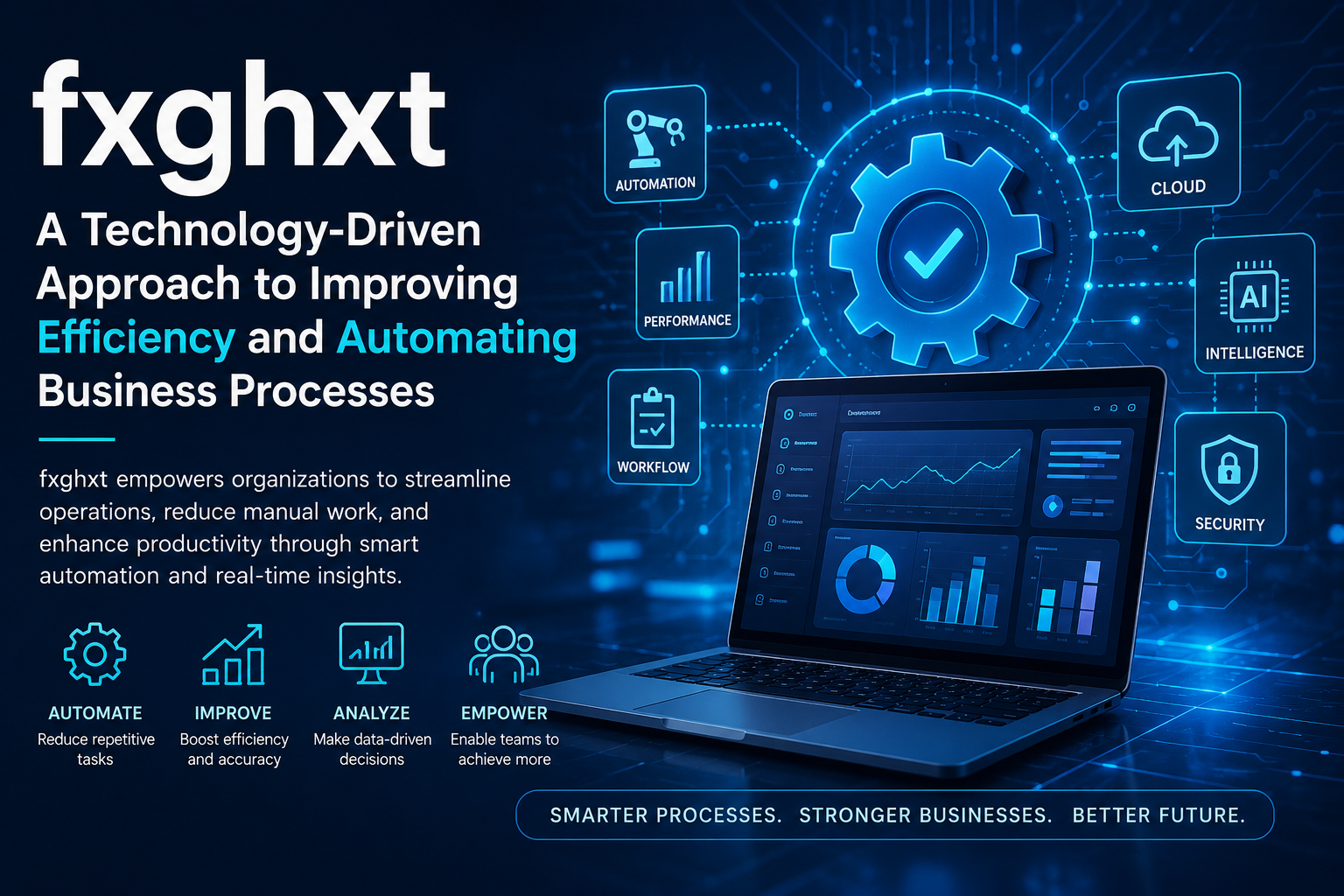
In today’s rapidly evolving digital economy, organizations continuously seek innovative ways to improve productivity, streamline operations, and remain competitive. fxghxt represents a modern technology-driven approach designed to help businesses enhance operational efficiency while automating repetitive processes. Rather than relying solely on traditional management methods, this concept integrates intelligent digital tools, data-driven strategies, and workflow optimization to create faster, more reliable, and scalable business operations. Whether implemented in small enterprises or multinational corporations, the underlying philosophy focuses on reducing manual effort, improving collaboration, and enabling organizations to adapt quickly to changing market conditions.
Digital transformation has become more than a trend. It has become a necessity for organizations that wish to compete in an increasingly connected world. Businesses generate enormous volumes of information every day, and managing this information manually often leads to delays, inconsistencies, and unnecessary operational costs. A technology-oriented framework enables organizations to convert raw data into meaningful insights while simplifying everyday tasks. As industries embrace automation and intelligent software solutions, companies gain the flexibility to focus more on innovation, customer satisfaction, and strategic planning rather than repetitive administrative activities.
The increasing adoption of cloud computing, artificial intelligence, machine learning, predictive analytics, and integrated communication platforms has accelerated organizational transformation across nearly every sector. By combining these technologies within a structured framework, organizations can improve performance without significantly increasing operational complexity. This balanced approach creates opportunities for continuous improvement while ensuring that business processes remain adaptable and resilient in an ever-changing environment.
Understanding the Core Philosophy Behind This Platform
The primary objective of this fxghxt is to create an environment where routine operations become faster, more accurate, and less dependent on manual intervention. Organizations frequently encounter challenges involving repetitive tasks, fragmented communication, duplicated information, and inefficient resource allocation. A structured digital framework addresses these issues by integrating systems, automating workflows, and enabling real-time information sharing across departments.
Instead of treating automation as a replacement for human expertise, modern organizations increasingly use technology as a collaborative partner. Employees can dedicate more time to creativity, strategic planning, customer engagement, and innovation while intelligent systems handle repetitive administrative responsibilities. This partnership between people and technology improves both productivity and workplace satisfaction.
Another important principle involves continuous optimization. Business environments evolve rapidly, requiring organizations to monitor performance, evaluate outcomes, and refine operational processes regularly. Through continuous measurement and analysis, businesses can identify opportunities for improvement before small inefficiencies develop into larger operational challenges.
The Evolution of Digital Business Transformation
Technology has fundamentally changed how organizations operate during the past several decades. Earlier business environments relied heavily on paperwork, manual calculations, physical record keeping, and isolated communication channels. These methods often resulted in slower decision-making and increased administrative burdens.
The emergence of enterprise software introduced centralized information management, allowing organizations to store and retrieve business data more efficiently. Cloud computing later expanded accessibility by enabling employees to collaborate securely from virtually any location. Artificial intelligence further accelerated this transformation by introducing predictive capabilities, intelligent automation, and advanced data analysis.
Today, organizations increasingly adopt integrated digital ecosystems where multiple business applications communicate seamlessly. Finance, marketing, customer service, supply chain management, human resources, and operations become interconnected through centralized platforms that improve visibility and coordination.
Table: Traditional Operations Compared with Modern Technology-Driven Operations
| Business Function | Traditional Method | Technology-Driven Approach |
|---|---|---|
| Data Management | Manual records | Centralized digital databases |
| Communication | Emails and paperwork | Integrated collaboration platforms |
| Workflow Processing | Human-dependent approvals | Automated workflow systems |
| Reporting | Periodic manual reports | Real-time dashboards |
| Customer Support | Manual responses | Intelligent service platforms |
| Decision Making | Historical analysis | Predictive analytics |
| Resource Allocation | Experience-based | Data-driven optimization |
| Process Monitoring | Periodic reviews | Continuous real-time monitoring |
The comparison illustrates how digital innovation enables organizations to improve speed, accuracy, transparency, and operational consistency without increasing unnecessary complexity.
How Intelligent Automation Improves Organizational Efficiency
fxghxt represents one of the most valuable components of modern business operations. Many organizations spend thousands of working hours every year completing repetitive administrative activities that require little strategic thinking. Tasks such as invoice processing, appointment scheduling, document approval, report generation, inventory updates, customer notifications, and compliance verification consume valuable employee time.
By automating these repetitive activities, organizations significantly reduce processing times while improving consistency. Employees can redirect their attention toward innovation, customer relationships, strategic planning, and creative problem-solving.
Automation also minimizes human error. Manual data entry often introduces mistakes that create financial losses, compliance issues, or operational delays. Automated systems follow predefined rules consistently, improving reliability across multiple business functions.
Data as the Foundation of Smarter Decision-Making
Every organization generates valuable information through customer interactions, financial transactions, production activities, supply chain operations, employee performance, and market research. When properly organized and analyzed, this information becomes a strategic asset.
fxghxt platforms transform raw business data into meaningful insights through visualization dashboards, predictive models, and performance indicators. Decision-makers gain immediate access to operational trends rather than waiting weeks for manually prepared reports.
Predictive analytics enables organizations to anticipate customer demand, identify operational risks, forecast financial performance, optimize inventory levels, and improve resource planning. These capabilities support proactive management instead of reactive problem-solving.
fxghxt also benefit from improved transparency. Managers across different departments share access to consistent information, reducing misunderstandings and improving collaboration during strategic planning.
Cloud Technology and Organizational Flexibility
Cloud computing has become an essential component of modern fxghxt because it provides secure access to applications, documents, databases, and collaboration tools regardless of physical location.
Remote teams can collaborate efficiently through centralized cloud platforms while maintaining consistent access to organizational resources. This flexibility supports hybrid work environments, international operations, and business continuity during unexpected disruptions.
Cloud infrastructure also reduces capital investment in physical hardware while improving system reliability through automatic updates, scalable storage, disaster recovery capabilities, and advanced cybersecurity features.
Building a Culture That Supports Digital Innovation
fxghxt alone cannot transform an organization without supportive leadership and an adaptable workplace culture. Successful digital transformation depends upon employees understanding the purpose behind technological changes and actively participating in continuous improvement initiatives.
fxghxt that encourage learning, collaboration, experimentation, and knowledge sharing typically achieve stronger long-term outcomes. Leadership plays an essential role by communicating strategic objectives, providing training opportunities, and recognizing employee contributions throughout the transformation journey.
Continuous professional development ensures employees remain confident when adopting new digital platforms and intelligent business solutions.
Artificial Intelligence as a Driver of Business Innovation
Artificial intelligence has become one of the most influential technologies shaping modern organizations. Instead of simply replacing repetitive work, intelligent systems analyze patterns, recognize trends, and provide recommendations that support informed business decisions. fxghxt can process enormous amounts of information in seconds, enabling leaders to respond quickly to changing market conditions. As technology continues to evolve, intelligent solutions help businesses improve customer experiences, optimize operations, and identify opportunities for sustainable growth.
Machine learning further strengthens fxghxt capabilities by allowing systems to improve continuously through experience. Rather than requiring constant manual programming, algorithms learn from historical data and become increasingly accurate over time. This continuous learning process allows organizations to enhance forecasting accuracy, improve quality control, strengthen cybersecurity monitoring, and personalize customer interactions with greater precision.
Natural language processing has also transformed communication between businesses and customers. Virtual assistants, intelligent chat platforms, and automated support systems provide immediate responses while reducing service delays. Human representatives can therefore concentrate on more complex customer concerns that require critical thinking and personalized attention.
Business Process Integration Across Departments
One of the greatest challenges fxghxt face is managing disconnected systems that prevent efficient communication. Finance departments often use different software than marketing teams, while supply chain managers rely on separate platforms from customer service representatives. This fragmentation creates duplicated work, inconsistent information, and slower decision-making.
A technology-driven environment encourages seamless integration among organizational functions. Centralized systems allow departments to access consistent information while maintaining appropriate security controls. Information entered once becomes available across multiple applications, reducing manual duplication and minimizing data inconsistencies.
fxghxt environments also improve collaboration. Employees can monitor project progress, share updates instantly, coordinate schedules, and resolve operational issues more efficiently because everyone works with the same reliable information.
Enhancing Customer Experience Through Technology
Customer expectations continue to evolve alongside digital innovation. People increasingly expect businesses to provide fast responses, personalized services, and convenient digital experiences regardless of time or location.
Organizations adopting advanced technological solutions can better understand customer preferences through behavioral analysis and purchasing patterns. These insights support personalized recommendations, targeted communication, and improved customer engagement.
Digital platforms also simplify customer interactions through online self-service portals, automated appointment scheduling, secure payment systems, and real-time order tracking. These capabilities reduce waiting times while improving overall satisfaction.
Table: Technologies Supporting Organizational Growth
| Technology | Primary Purpose | Organizational Benefit |
|---|---|---|
| Artificial Intelligence | Intelligent decision support | Faster analysis and improved forecasting |
| Machine Learning | Pattern recognition | Continuous process improvement |
| Cloud Computing | Remote accessibility | Flexible and scalable operations |
| Big Data Analytics | Information analysis | Better strategic planning |
| Internet of Things | Connected devices | Real-time operational monitoring |
| Robotic Process Automation | Repetitive task automation | Higher productivity |
| Cybersecurity Solutions | Data protection | Improved digital resilience |
| Business Intelligence | Performance reporting | Better executive decision-making |
Cybersecurity in the Digital Workplace
As organizations become increasingly dependent on digital systems, protecting sensitive information becomes more important than ever. Cybersecurity is no longer limited to information technology departments because every employee contributes to maintaining a secure digital environment.
Modern security strategies include multiple protective layers such as encryption, identity verification, multi-factor authentication, network monitoring, and continuous threat detection. These measures reduce vulnerabilities while ensuring business continuity.
Employee awareness remains equally important. Organizations invest in cybersecurity education so staff members can recognize phishing attempts, suspicious communications, and other potential security threats. A knowledgeable workforce significantly strengthens overall organizational resilience.
Digital Leadership in Modern Organizations
Technology initiatives succeed when supported by effective leadership. Organizational leaders establish the vision, allocate resources, encourage innovation, and create an environment where employees feel confident adopting new technologies.
Successful digital leaders balance technological investment with human development. Rather than focusing exclusively on software implementation, they recognize the importance of employee training, organizational communication, and continuous improvement.
Decision-makers also encourage collaboration across departments to ensure technology investments align with strategic business objectives. This integrated approach prevents isolated projects and promotes organization-wide transformation.
The Role of Automation in Operational Excellence
Operational excellence depends upon consistency, efficiency, and continuous improvement. Automation contributes significantly by eliminating repetitive administrative work while maintaining standardized procedures across the organization.
Automated approval workflows accelerate document processing without sacrificing accountability. Financial transactions, procurement requests, inventory updates, and employee onboarding activities can all follow predefined digital workflows that improve speed and transparency.
Organizations also benefit from improved compliance because automated systems consistently follow established policies and regulatory requirements. Detailed audit trails simplify reporting while reducing administrative complexity.
Measuring Organizational Performance
Continuous performance measurement enables organizations to evaluate progress objectively and identify opportunities for improvement. Modern digital dashboards provide executives with immediate access to operational indicators rather than relying solely on periodic reports.
Performance metrics may include productivity levels, customer satisfaction, operational efficiency, financial performance, employee engagement, project completion rates, and service quality. Real-time visibility allows organizations to address emerging issues before they significantly affect business outcomes.
Predictive reporting further enhances strategic planning by identifying future trends based on historical performance patterns. Rather than reacting after problems occur, organizations proactively adjust strategies to maintain sustainable growth.
Performance measurement also encourages accountability because departments share transparent objectives supported by measurable outcomes. This alignment strengthens collaboration while supporting continuous organizational improvement.
The Importance of Workflow Optimization
Workflow optimization is a continuous effort to refine the way tasks move through an organization. Inefficient workflows often lead to duplicated work, unnecessary approvals, communication delays, and increased operational costs. A technology-driven environment addresses these challenges by mapping every stage of a business process and identifying areas where improvements can be introduced.
Digital workflow management systems provide clear visibility into ongoing activities, allowing managers to monitor progress, assign responsibilities, and ensure deadlines are met. Employees also benefit from standardized procedures that reduce confusion and improve collaboration across departments.
Organizations that regularly optimize workflows often experience faster project completion, improved service quality, and greater customer satisfaction. By eliminating unnecessary steps and introducing automation where appropriate, businesses create a more productive and agile working environment capable of adapting to future challenges.
The Growing Role of Data Analytics
fxghxt generate valuable information every day through customer interactions, financial transactions, operational activities, and digital communications. Data analytics transforms this information into actionable knowledge that supports strategic planning and operational improvement.
fxghxt platforms collect information from multiple sources and present it through interactive dashboards and visual reports. Executives gain immediate insights into performance trends, customer behavior, and operational efficiency without waiting for manually prepared reports.
Predictive analytics helps businesses anticipate future demand, identify emerging risks, optimize inventory management, and improve financial planning. These capabilities allow organizations to make proactive decisions rather than reacting after problems occur.
Innovation as a Continuous Business Strategy
Innovation is no longer limited to product development. Modern organizations innovate by improving processes, enhancing customer experiences, and adopting emerging technologies that create lasting competitive advantages.
A technology-driven organizational culture encourages employees to experiment with new ideas while learning from operational experiences. Continuous improvement becomes part of daily business activities rather than an occasional initiative.
Innovation also supports organizational resilience by enabling businesses to adapt quickly when economic conditions, industry regulations, or customer preferences shift unexpectedly.
Table: Business Benefits of Digital Transformation
| Business Area | Before Digital Transformation | After Digital Transformation |
|---|---|---|
| Productivity | Manual repetitive work | Automated and optimized workflows |
| Customer Service | Longer response times | Faster and personalized support |
| Communication | Separate systems | Integrated collaboration |
| Reporting | Manual data collection | Real-time business dashboards |
| Decision Making | Limited historical analysis | Predictive and data-driven insights |
| Security | Basic protection | Advanced cybersecurity monitoring |
| Resource Management | Manual scheduling | Intelligent resource optimization |
| Business Growth | Limited scalability | Flexible and cloud-enabled expansion |
Challenges Organizations May Encounter
Although technology provides numerous advantages, successful implementation requires careful planning. Organizations often encounter challenges such as resistance to change, employee skill gaps, integration complexities, and budget limitations.
Employees may initially hesitate to adopt unfamiliar technologies, particularly when existing processes have remained unchanged for many years. Effective communication and comprehensive training programs help build confidence while demonstrating the practical benefits of new digital systems.
System integration presents another challenge when organizations rely on multiple legacy applications that were not originally designed to work together. Careful planning and phased implementation strategies minimize disruption while ensuring long-term compatibility.
Future Trends Influencing Organizational Technology
Emerging technologies continue to reshape the business landscape. Artificial intelligence is becoming increasingly sophisticated, enabling more advanced automation, predictive analysis, and intelligent decision support.
The Internet of Things connects physical devices to digital systems, providing real-time operational information across manufacturing, logistics, healthcare, agriculture, and smart infrastructure. Organizations gain greater visibility into equipment performance, environmental conditions, and operational efficiency.
Blockchain technology offers secure and transparent transaction management, improving trust within financial services, supply chain management, and digital identity verification.
Creating a Sustainable Digital Future
Sustainability has become an essential consideration for modern organizations. Technology contributes by reducing paper consumption, improving energy efficiency, optimizing transportation, and supporting environmentally responsible operations.
Cloud computing reduces dependence on extensive physical infrastructure while intelligent energy management systems monitor resource consumption and identify opportunities for conservation.
Digital documentation eliminates unnecessary printing, while automated supply chain management reduces waste through improved forecasting and inventory optimization.
Preparing Employees for Digital Success
The effectiveness of any technological initiative depends largely on the people who use it. Continuous learning ensures employees remain confident when adopting new digital platforms, automation tools, and analytical systems.
Training programs should combine technical instruction with practical business applications so employees understand how technology improves their daily responsibilities. Mentorship, workshops, and collaborative learning environments encourage knowledge sharing across departments.
Conclusion
The modern business environment demands greater efficiency, adaptability, and innovation than ever before. fxghxt represents a forward-looking technology-driven approach that enables organizations to automate processes, improve operational performance, strengthen collaboration, and make informed decisions through intelligent digital solutions. By integrating automation, artificial intelligence, cloud computing, data analytics, cybersecurity, and workflow optimization into a unified strategy, businesses can reduce operational complexity while increasing productivity and long-term competitiveness.
As technology continues to evolve, organizations that embrace continuous improvement and digital innovation will be better positioned to respond to changing market conditions and customer expectations. Success depends not only on implementing advanced technologies but also on cultivating a culture that values learning, collaboration, and strategic thinking. Through thoughtful adoption of modern digital practices, organizations can achieve sustainable growth, operational excellence, and lasting success in an