
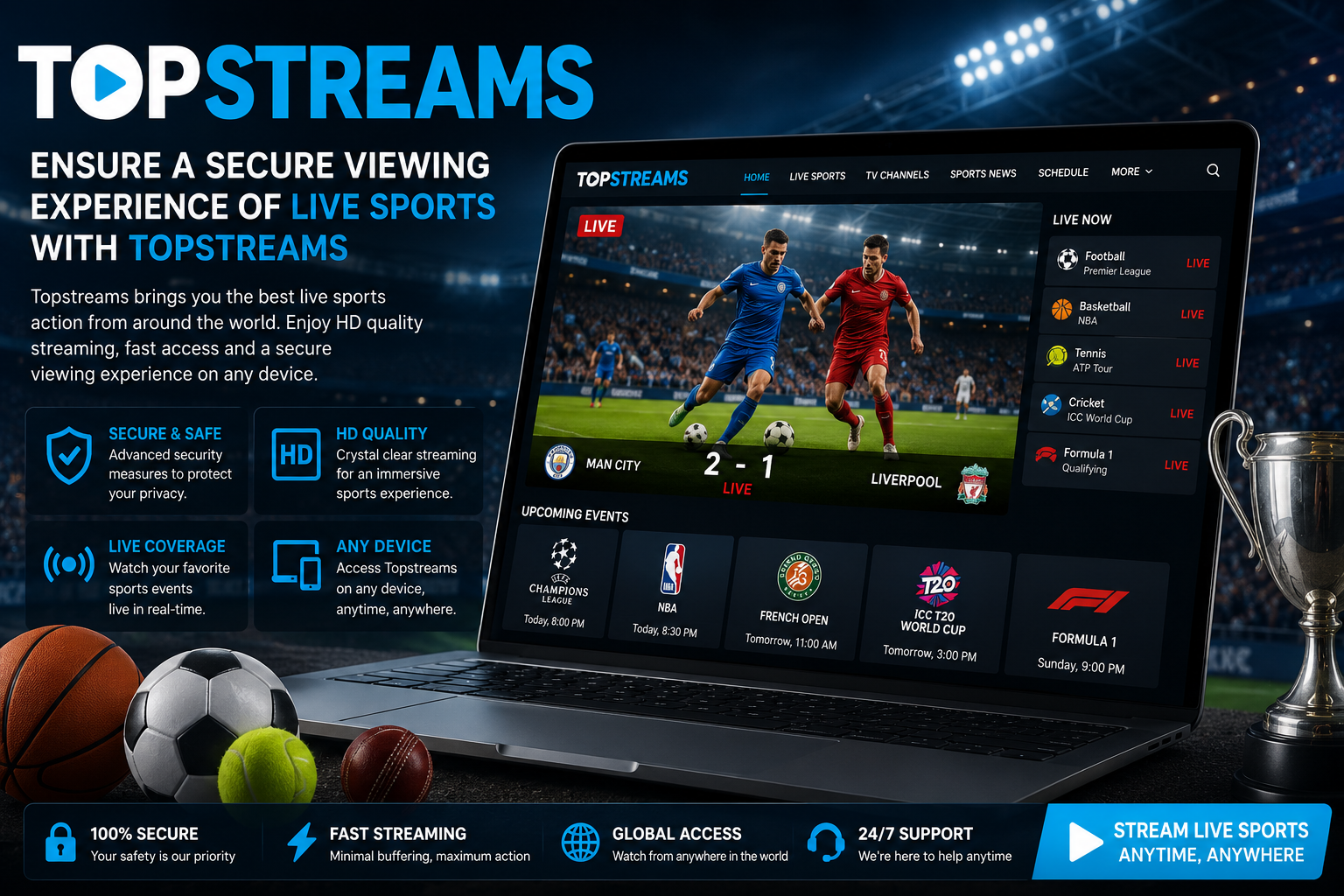
The world of sports entertainment has undergone a dramatic transformation in recent years. Fans no longer need to rely solely on traditional television broadcasts to follow their favorite teams, tournaments, and athletes. Digital streaming platforms have created new opportunities for audiences to access live sporting events from virtually anywhere. Among the names often associated with online sports streaming discussions, Topstreams has attracted attention for its connection to live sports viewing experiences. Understanding how streaming technology works and how viewers can maintain a secure viewing experience is essential in today’s digital environment.
Sports enthusiasts value instant access to live events, real-time updates, and high-quality video playback. Whether watching football, basketball, cricket, tennis, motorsports, or other competitions, modern viewers expect reliable access and smooth performance. As digital sports entertainment continues growing, the importance of security, accessibility, and viewing quality becomes increasingly significant.
Understanding Topstream and Modern Sports Streaming
The growth of online streaming has fundamentally changed how sports fans consume content. Instead of depending exclusively on cable subscriptions or scheduled broadcasts, viewers can now access sporting events through internet-connected devices. This flexibility has contributed significantly to the popularity of digital sports platforms.
Streaming technology allows video content to be delivered continuously over the internet without requiring users to download large files before watching. This innovation enables near-instant viewing while reducing waiting times. The convenience offered by modern streaming systems has encouraged millions of sports fans to embrace digital viewing options.
Table 1: Evolution of Sports Viewing
| Era | Primary Viewing Method | Viewer Experience |
|---|---|---|
| Traditional Radio | Audio commentary | Limited visualization |
| Broadcast Television | Scheduled viewing | Fixed programming |
| Cable Networks | Dedicated sports channels | Expanded coverage |
| Online Streaming | Internet-based access | Flexible viewing |
| Multi-Device Streaming | Cross-platform access | Enhanced convenience |
Why Sports Fans Prefer Digital Streaming
Sports audiences increasingly prefer online streaming because it offers flexibility and accessibility. Viewers can watch events at home, during travel, or while commuting, provided they have internet access. This mobility aligns well with modern lifestyles and allows fans to stay connected to sporting action regardless of location.
Digital streaming also supports a wide range of devices, including smartphones, tablets, laptops, desktop computers, and smart televisions. The ability to switch between devices while maintaining access to live events contributes to a more convenient viewing experience.
Another important factor is the growing availability of high-definition video. Improved internet infrastructure and streaming technologies have made it possible for viewers to enjoy clearer visuals and better audio quality than ever before.
This Platform and Secure Digital Viewing
Security remains a crucial aspect of online entertainment. Sports fans often focus on viewing quality and accessibility, but digital safety is equally important. Secure browsing practices help protect personal information while improving the overall online experience.
Users should always keep their devices updated with the latest operating system and browser versions. Regular software updates address security vulnerabilities and improve system stability. Using strong passwords and secure internet connections further contributes to safer online activities.
The importance of digital awareness continues increasing as online services become more integrated into daily life. Responsible browsing habits can significantly reduce potential risks while supporting a safer entertainment environment.
Table 2: Security Practices for Online Viewing
| Security Measure | Purpose | Benefit |
|---|---|---|
| Updated Browser | Improved protection | Enhanced safety |
| Strong Passwords | Account security | Reduced risk |
| Secure Network | Protected connection | Safer browsing |
| Software Updates | Vulnerability fixes | Better reliability |
| Privacy Awareness | Information protection | Increased confidence |
Streaming Technology Behind Live Sports
Modern sports streaming depends on advanced technologies that deliver video efficiently across different devices and network conditions. One of the most important innovations is adaptive bitrate streaming. This technology automatically adjusts video quality according to internet speed, helping reduce interruptions during live events.
Cloud computing also plays a vital role in sports streaming infrastructure. Distributed servers and content delivery networks help deliver streams more efficiently to viewers located in different regions. These systems reduce latency while supporting large audiences during major sporting events.
Video compression technologies further enhance performance by minimizing file sizes without significantly reducing image quality. As a result, viewers can enjoy smoother playback while consuming less bandwidth.
User Experience in Sports Streaming Platforms
An effective user experience is essential for maintaining viewer satisfaction. Sports fans expect intuitive navigation, quick access to live events, and responsive interfaces that function well across various devices.
Modern streaming websites often organize content into categories that simplify browsing. Users can quickly locate live events, upcoming matches, highlights, and related content through well-structured menus and search functions. These features reduce frustration and help viewers focus on enjoying the sporting action.
Responsive design further improves accessibility by adapting layouts automatically to different screen sizes. Whether using a smartphone or a large television, viewers benefit from interfaces optimized for their devices.
Table 3: Elements of a Strong Viewing Experience
| Feature | Function | Viewer Benefit |
|---|---|---|
| Responsive Design | Device adaptation | Better usability |
| Fast Loading | Reduced waiting time | Smooth access |
| Search Tools | Event discovery | Easier navigation |
| HD Playback | Improved visuals | Enhanced enjoyment |
| Live Updates | Real-time information | Better engagement |
High-Definition Sports Viewing
Visual quality plays a significant role in sports entertainment. Fast-moving action requires clear images that allow viewers to follow gameplay, player movements, and critical moments effectively. High-definition streaming helps create a more immersive experience by delivering sharper visuals and improved detail.
Audio quality is equally important. Clear commentary and stadium atmosphere contribute to viewer engagement and help replicate the excitement of attending events in person. Modern streaming systems continue improving both video and audio performance to meet growing audience expectations.
Accessibility Across Multiple Devices
One of the greatest strengths of digital streaming is its ability to function across multiple devices. Sports fans often switch between screens depending on their location and circumstances. Mobile devices provide flexibility for viewers on the move, while larger displays offer a more immersive experience at home.
Cross-device compatibility ensures consistent functionality regardless of hardware. Modern streaming technologies automatically adjust playback settings and interface layouts to accommodate different devices, helping maintain usability and performance.
This accessibility has contributed significantly to the widespread adoption of online sports streaming. As technology continues advancing, viewers can expect even greater convenience and flexibility in the future.
Content Delivery Systems and Live Sports Broadcasting
Modern live topstreams depends on sophisticated content delivery systems that ensure viewers receive uninterrupted coverage regardless of their location. These systems distribute video through multiple servers positioned around the world, allowing sports fans to connect to the nearest available network. This approach reduces delays, minimizes buffering, and improves overall streaming stability during high-demand sporting events.
Major tournaments often attract millions of simultaneous viewers. Without advanced distribution technology, servers could become overloaded, resulting in poor performance. Content delivery networks help balance internet traffic efficiently by sharing the workload across multiple locations. This infrastructure plays an important role in maintaining smooth viewing experiences for audiences worldwide.
Cloud-based services have also strengthened sports broadcasting by improving scalability. During major championships, cloud technology allows streaming systems to allocate additional resources automatically, ensuring reliable performance even when audience numbers increase significantly.
Table 4: Technologies Supporting Live Sports Streaming
| Technology | Primary Purpose | Viewer Benefit |
|---|---|---|
| Content Delivery Network | Faster video distribution | Reduced buffering |
| Cloud Computing | Scalable infrastructure | Reliable streaming |
| Adaptive Bitrate | Dynamic video quality | Continuous playback |
| Video Compression | Efficient data transfer | Better performance |
| High-Speed Broadband | Stable internet access | HD viewing quality |
| Smart Caching | Faster content loading | Improved responsiveness |
Internet Performance and Viewing Quality
Internet speed remains one of the most important factors affecting topstreams. Live sporting events involve continuous video transmission, requiring stable bandwidth to maintain high-definition playback. Fluctuating internet connections may reduce video quality temporarily, but modern adaptive streaming technologies help minimize interruptions.
Reliable broadband services continue expanding globally, making high-quality streaming more accessible than ever before. Fiber-optic connections, advanced wireless networks, and improved mobile internet services have significantly enhanced digital entertainment.
The combination of faster internet speeds and optimized topstreams enables viewers to enjoy smoother broadcasts with minimal delay. This improvement is especially valuable during live competitions where real-time action is essential for maintaining excitement.
Audience Engagement in Digital Sports
Topstreams has transformed sports fans from passive viewers into active participants. Many digital platforms now integrate live score updates, match statistics, event schedules, and interactive features that enrich the viewing experience.
Supporters often follow multiple competitions simultaneously while discussing matches across social media platforms. Digital connectivity allows fans to celebrate victories, analyze performances, and share memorable moments instantly with global communities.
The growing popularity of online engagement has encouraged sports organizations to strengthen their digital presence through multimedia content, behind-the-scenes coverage, and interactive broadcasts that keep audiences connected throughout entire seasons.
Table 5: Factors That Improve Viewer Engagement
| Feature | Purpose | Viewer Experience |
|---|---|---|
| Live Scores | Real-time updates | Better match tracking |
| Match Statistics | Performance insights | Deeper understanding |
| Event Schedules | Upcoming fixtures | Easy planning |
| HD Video | Enhanced visuals | Greater immersion |
| Multi-Device Access | Flexible viewing | Increased convenience |
| Responsive Interface | Simple navigation | Better usability |
User-Friendly Interface Design
An organized interface significantly improves the overall topstreams. Sports fans typically want immediate access to live events without navigating complicated menus. Modern streaming websites therefore prioritize clean layouts, clear navigation, and efficient search functions.
Search tools allow viewers to locate specific competitions, leagues, or sporting events quickly. Categorized sections further simplify browsing by organizing content according to sport, tournament, or schedule.
Responsive website design ensures consistent usability across smartphones, tablets, laptops, and desktop computers. Automatic screen adjustment improves accessibility while maintaining a familiar interface regardless of device size.
Security Awareness for Sports Fans
Maintaining online security is an essential part of responsible internet usage. Individuals accessing topstreams should remain aware of general cybersecurity practices that help protect personal information and improve online safety.
Keeping browsers updated helps address software vulnerabilities while improving compatibility with modern web technologies. Secure internet connections further reduce exposure to unnecessary risks during online activities.
Users should also remain mindful of privacy practices by protecting login credentials and avoiding unnecessary sharing of sensitive information. Digital awareness contributes to a safer and more reliable online experience across many forms of internet activity.
The Role of Artificial Intelligence in Streaming
Artificial intelligence has become an increasingly valuable component of topstreams. Modern recommendation systems analyze viewing preferences to suggest sporting events that align with individual interests. Personalized content helps viewers discover competitions, highlights, and related programming more efficiently.
Machine learning also supports video optimization by improving playback quality and reducing buffering. Intelligent algorithms continuously monitor network conditions, allowing streaming platforms to adjust video quality automatically for smoother viewing.
As artificial intelligence continues developing, sports streaming services are expected to become more personalized, responsive, and efficient, further enhancing viewer satisfaction.
Table 6: Artificial Intelligence Applications
| AI Technology | Function | Benefit |
|---|---|---|
| Personalized Recommendations | Suggest relevant content | Easier discovery |
| Adaptive Streaming | Optimize video quality | Fewer interruptions |
| Smart Search | Faster event location | Improved navigation |
| Viewing Analysis | Understand preferences | Better customization |
| Network Optimization | Improve performance | Reliable playback |
| Automated Organization | Categorize content | Simplified browsing |
Growing Popularity of Online Sports Entertainment
Topstreams continues expanding as technology improves accessibility and convenience. Fans appreciate the ability to watch competitions from virtually anywhere while enjoying improved video quality and responsive viewing experiences.
The increasing availability of smart devices, faster internet services, and advanced streaming technologies has transformed sports consumption into a flexible digital experience. These developments continue attracting audiences seeking greater convenience and more personalized entertainment.
As innovation progresses, sports streaming will likely become even more immersive, providing viewers with richer experiences and improved accessibility across an expanding range of connected devices.
Global Growth of Sports Streaming
The popularity of topstreams continues to expand as internet access becomes faster and more widely available. Millions of fans now prefer watching competitions through digital platforms because they provide flexibility, convenience, and access across multiple devices. Improvements in streaming infrastructure have enabled audiences to enjoy sporting events from almost anywhere while maintaining impressive video quality.
International tournaments have especially benefited from topstreams. Fans who once relied on local television schedules can now follow competitions involving teams and athletes from different countries. This broader accessibility has strengthened global interest in sports and encouraged greater cultural exchange through international events.
The increasing availability of multilingual commentary and subtitle support has also improved accessibility for diverse audiences. These features allow viewers from different regions to enjoy competitions more comfortably while expanding the reach of global sporting events.
Table 7: Traditional Broadcasting Compared with Digital Streaming
| Feature | Traditional Broadcasting | Digital Streaming |
|---|---|---|
| Viewing Schedule | Fixed programming | On-demand accessibility |
| Device Support | Television | Multiple connected devices |
| Location Flexibility | Limited | Almost anywhere with internet |
| Personalization | Minimal | Customized recommendations |
| HD Availability | Broadcast dependent | High-definition support |
| Accessibility | Regional coverage | Global internet access |
Future Innovations in Sports Streaming
Technology continues shaping the future of topstreams. Artificial intelligence, cloud computing, and next-generation internet infrastructure are expected to improve streaming quality while enhancing personalization for viewers.
Machine learning algorithms will likely become even more effective at recommending sporting events based on user preferences. Personalized homepages, intelligent search functions, and customized notifications may help sports fans discover competitions more efficiently than ever before.
Advances in network technology are expected to reduce latency further, allowing viewers to experience live events with minimal delay. Faster internet speeds will also support higher video resolutions, creating more immersive sports viewing experiences across all compatible devices.
Responsible Digital Entertainment
Topstreams offers significant convenience, but responsible viewing habits remain important. Maintaining a healthy balance between sports entertainment, work, education, and personal activities contributes to overall well-being.
Parents and guardians may also choose to supervise younger viewers while encouraging age-appropriate content and balanced screen time. Responsible use of digital devices helps create positive entertainment experiences while supporting healthy daily routines.
Table 8: Responsible Viewing Practices
| Practice | Purpose | Positive Outcome |
|---|---|---|
| Balanced Screen Time | Healthy routine | Better well-being |
| Updated Software | Improved security | Safer browsing |
| Strong Passwords | Account protection | Reduced security risks |
| Secure Internet | Stable connection | Reliable streaming |
| Privacy Awareness | Data protection | Greater confidence |
| Device Maintenance | Better performance | Smooth viewing |
Viewer Expectations Continue to Rise
Modern audiences expect more than simply watching sporting events topstreams. They value intuitive website navigation, responsive interfaces, quick loading times, and consistently high-definition playback. Streaming providers continue improving these aspects as competition within the digital entertainment industry increases.
Responsive website design has become a standard feature because viewers frequently switch between smartphones, tablets, laptops, and smart televisions. Consistent interfaces across devices help simplify navigation while maintaining familiarity for users regardless of screen size.
Faster internet infrastructure has also raised expectations regarding playback quality. Buffering interruptions that were once common have become increasingly unacceptable as streaming technologies continue advancing.
Digital Communities and Sports Fans
Topstreams has strengthened connections among sports enthusiasts worldwide. Fans now discuss matches, celebrate victories, analyze player performances, and exchange opinions through digital communities immediately after significant sporting events.
The growth of social media has further enhanced audience engagement by allowing supporters to share highlights, reactions, and memorable moments in real time. These interactions have created vibrant online communities that extend the excitement of sporting events beyond the competition itself.
Sports organizations increasingly recognize the importance of digital engagement by providing additional multimedia content, interviews, statistics, and behind-the-scenes coverage that keeps audiences connected throughout entire seasons.
Technology Driving Future Development
Continuous innovation remains one of the strongest forces behind digital sports entertainment. Cloud computing, artificial intelligence, faster processors, improved graphics technologies, and advanced networking solutions continue improving streaming quality and accessibility.
Future developments are expected to make sports viewing even more interactive while introducing smarter recommendation systems, improved personalization, and enhanced multimedia experiences. These technological advancements will likely continue transforming how audiences discover and enjoy live sporting events.