
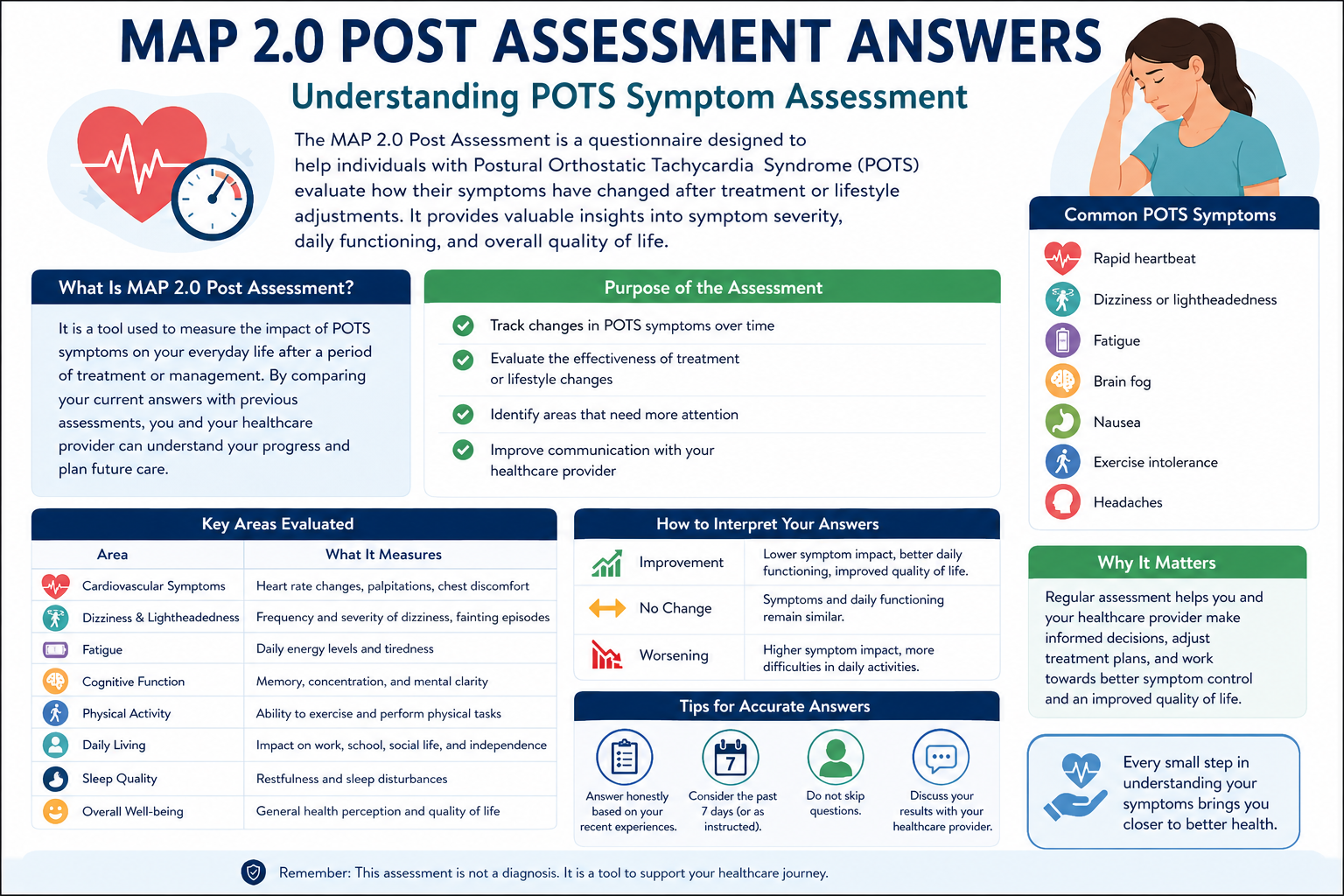
The questionnaire focuses on several areas of daily life, including physical activity, dizziness, fatigue, concentration, and overall well-being. By comparing responses over multiple assessments, individuals and clinicians can identify trends that may indicate improvement, stability, or worsening symptoms. This systematic approach supports informed discussions during medical appointments and helps guide future treatment decisions.
Understanding This Platform
The purpose of map 2.0 post assessment answers is to evaluate how POTS-related symptoms affect an individual’s daily routine after completing a management program or treatment period. Unlike a simple checklist, the questionnaire examines multiple aspects of health to create a broader picture of symptom burden.
POTS is a disorder of the autonomic nervous system that affects blood circulation and heart rate regulation. Symptoms commonly occur when standing and may include rapid heartbeat, dizziness, fainting, fatigue, headaches, brain fog, nausea, and exercise intolerance. Since these symptoms vary greatly between patients, standardized assessments provide a consistent method for monitoring changes over time.
Healthcare professionals often compare responses from an initial assessment with later evaluations to determine whether interventions such as increased hydration, medication, physical therapy, dietary changes, or exercise programs have produced measurable improvements.
Table: Purpose of Different Assessment Stages
| Assessment Stage | Primary Goal | Typical Outcome |
|---|---|---|
| Initial Assessment | Establish baseline symptoms | Records starting condition |
| Mid-Treatment Assessment | Monitor progress | Identifies early improvements or concerns |
| Post Assessment | Measure overall outcome | Evaluates treatment effectiveness |
| Follow-Up Assessment | Track long-term stability | Monitors symptom maintenance |
Why This Platform Matter
The value of map 2.0 post assessment answers extends beyond simply assigning a score. Consistent assessments allow healthcare providers to understand symptom patterns that might otherwise be overlooked. Patients sometimes adapt to their symptoms without realizing gradual improvements or declines, making objective questionnaires especially valuable.
When completed honestly, these assessments may reveal improvements in standing tolerance, reduced episodes of dizziness, better concentration, improved sleep quality, or increased ability to perform daily activities. They may also highlight areas where additional treatment or lifestyle modifications are needed.
The questionnaire supports patient-centered care by encouraging active participation in symptom monitoring. Rather than relying solely on memory during clinic visits, patients can refer to documented responses that provide a clearer picture of their experiences over weeks or months.
How the Questionnaire Measures Symptoms
A structured assessment generally explores several health domains instead of focusing on a single symptom. Each section contributes to a broader understanding of how POTS influences everyday life.
Table: Common Symptom Categories
| Category | What It Measures | Why It Matters |
|---|---|---|
| Heart Rate Symptoms | Palpitations and rapid heartbeat | Indicates autonomic function |
| Dizziness | Standing intolerance | Reflects circulation changes |
| Fatigue | Daily energy levels | Measures functional capacity |
| Brain Fog | Memory and concentration | Evaluates cognitive impact |
| Physical Activity | Ability to exercise | Indicates endurance improvements |
| Daily Living | Routine task completion | Measures independence |
| Sleep Quality | Restfulness | Influences symptom recovery |
| Overall Wellness | General health perception | Provides holistic evaluation |
Each category contributes important information about symptom severity. Instead of focusing on a single measurement, clinicians evaluate patterns across all responses.
How Healthcare Providers Interpret Results
Understanding questionnaire responses requires clinical judgment rather than relying solely on numerical scores. Healthcare professionals compare previous assessments with current responses while considering medications, hydration, physical activity, nutrition, and other medical conditions.
For example, a patient reporting fewer dizzy spells but persistent fatigue may require a different management strategy than someone whose heart rate has improved but continues experiencing brain fog. Individual symptom patterns often guide treatment adjustments.
Changes observed over multiple assessments can help clinicians determine whether current therapies remain appropriate or whether alternative interventions should be considered. The goal is not simply achieving lower scores but improving overall quality of life and daily functioning.
Factors That Can Influence Responses
Several factors may affect questionnaire results even when no major medical changes have occurred. Sleep quality, emotional stress, illness, dehydration, physical activity, and environmental temperature can temporarily alter symptom severity.
Patients are generally encouraged to answer based on their recent experiences rather than focusing on a particularly good or bad day. Honest and consistent responses provide the most meaningful information for long-term monitoring.
Maintaining similar conditions before each assessment, such as completing the questionnaire at approximately the same time of day and considering symptoms over a consistent timeframe, can improve the reliability of comparisons between assessments.
Research Supporting the Use of Structured Symptom Assessments
Medical researchers increasingly recognize the importance of patient-reported outcome measures when evaluating chronic conditions such as Postural Orthostatic Tachycardia Syndrome. Since many symptoms cannot be fully measured through laboratory tests alone, structured questionnaires provide additional insight into how patients function in their daily lives. Information gathered through map 2.0 post assessment answers contributes to a more complete understanding of symptom severity, treatment response, and overall quality of life.
Researchers often combine questionnaire data with heart rate measurements, blood pressure monitoring, exercise tolerance testing, and clinical evaluations. Together, these sources provide a balanced view of patient health while helping clinicians identify meaningful changes over time. Although individual responses remain subjective, repeated assessments improve reliability by highlighting consistent trends rather than isolated experiences.
How Patients Can Prepare Before Completing This Platfrom
Preparing before completing the questionnaire helps ensure that responses accurately reflect recent experiences. Rather than rushing through each question, patients benefit from taking a few moments to consider how symptoms have affected them during the recommended evaluation period.
Some individuals find it useful to keep a daily symptom journal that records dizziness, fatigue, heart palpitations, headaches, sleep quality, hydration habits, and physical activity. Reviewing these notes before answering the questionnaire can improve consistency and reduce reliance on memory alone.
Healthcare providers may also encourage patients to complete the assessment before appointments so there is enough time to discuss any significant changes. Honest responses remain the most valuable because they provide a realistic picture of current health rather than the outcome patients hope to achieve.
Table: Preparing for the Assessment
| Preparation Step | Purpose | Possible Benefit |
|---|---|---|
| Review recent symptoms | Improve recall | More accurate responses |
| Complete the questionnaire in a quiet setting | Reduce distractions | Better concentration |
| Consider the entire assessment period | Avoid focusing on one day | Greater consistency |
| Discuss unclear questions with a healthcare provider | Improve understanding | More reliable interpretation |
| Keep previous assessments for comparison | Track long-term changes | Better progress monitoring |
Careful preparation does not change the questionnaire itself, but it improves the quality of the information collected and makes future comparisons more meaningful.
Understanding Progress Without Expecting Immediate Perfection
One of the most important concepts in chronic condition management is recognizing that improvement does not always occur in a straight line. Many individuals experience periods of progress followed by temporary setbacks caused by illness, stress, weather changes, or increased physical activity. For this reason, map 2.0 post assessment answers should be interpreted as part of a long-term journey rather than a single measure of success.
Even modest improvements deserve attention. A patient who experiences fewer episodes of dizziness while still struggling with fatigue may still be making meaningful progress. Likewise, someone who can participate in daily activities for longer periods than before may demonstrate improved functional capacity despite ongoing symptoms.
Healthcare providers typically evaluate the overall pattern rather than expecting every symptom to improve at the same rate.
Comparing Baseline and Post Assessment Results
One of the strengths of structured questionnaires lies in comparing current responses with an earlier baseline assessment. Baseline information establishes where symptoms began, while later assessments illustrate whether meaningful changes have occurred.
This comparison helps identify which aspects of health have improved, remained stable, or become more challenging. It also supports conversations about modifying treatment plans when necessary. Patients often appreciate seeing documented evidence of gradual improvements that may not have been obvious during everyday life.
Table: Example Comparison Framework
| Assessment Area | Baseline Observation | Post Assessment Observation |
|---|---|---|
| Standing Tolerance | Frequently limited | Improved duration |
| Daily Fatigue | Severe most days | Moderate on many days |
| Concentration | Frequent brain fog | Better mental clarity |
| Physical Activity | Minimal participation | Increased endurance |
| Daily Independence | Significant limitations | Greater functional ability |
| Overall Wellness | Poor quality of life | Noticeable improvement |
These examples illustrate how structured comparisons can support discussions between patients and healthcare professionals while emphasizing long-term progress instead of isolated symptoms.
The Connection Between Symptom Monitoring and Personalized Care
Every individual experiences POTS differently, making personalized treatment especially important. Some patients primarily struggle with rapid heart rate, while others experience overwhelming fatigue, headaches, digestive symptoms, or cognitive difficulties. Because symptom profiles vary, standardized questionnaires help clinicians understand each patient’s unique experience.
Repeated assessments also help determine whether current management strategies remain appropriate. If certain symptoms continue despite treatment, healthcare providers may recommend additional evaluations or modify existing therapies. Conversely, consistent improvement may indicate that the current management plan is working effectively.
Personalized care depends on accurate information, and structured assessments contribute valuable details that may not emerge during routine conversations alone.
Building Confidence Through Regular Self-Monitoring
Living with a chronic condition can sometimes feel unpredictable. Keeping track of symptoms using structured questionnaires allows many individuals to better understand their own health patterns. Recognizing gradual improvement can increase confidence and encourage continued participation in healthy routines recommended by healthcare professionals.
Patients who regularly monitor their symptoms often become more aware of factors that influence how they feel. While the questionnaire does not identify exact causes, repeated observations may reveal useful patterns that support informed discussions during medical appointments.
Self-monitoring should always complement, rather than replace, professional medical care. The greatest value comes from combining questionnaire responses with clinical expertise, diagnostic testing, and individualized treatment planning.
The Importance of Consistent Follow-Up Assessments
One of the greatest strengths of map 2.0 post assessment answers is the ability to compare results across multiple time periods. POTS is a condition in which symptoms often fluctuate, making a single questionnaire less informative than a series of assessments completed over several months. Consistent follow-up provides healthcare professionals with a clearer understanding of whether a treatment plan continues to meet a patient’s needs.
Patients who regularly complete follow-up assessments often develop a more accurate picture of their health journey. Small improvements that may seem insignificant on a daily basis become much more noticeable when viewed over an extended period. Likewise, gradual worsening of symptoms can be identified early, allowing timely adjustments to treatment before symptoms become more severe.
Using This Platform Alongside Medical Evaluation
Although questionnaires provide valuable information, they represent only one component of comprehensive medical care. Physicians typically combine patient-reported responses with physical examinations, medical history, laboratory testing, heart rate measurements, blood pressure monitoring, and additional diagnostic procedures.
The combination of subjective experiences and objective clinical findings allows healthcare professionals to make better-informed decisions. A patient may report improved daily functioning even when certain physical measurements remain unchanged, while another individual may show measurable physiological improvement but continue experiencing significant fatigue or brain fog.
Table: Assessment Tools Used in POTS Management
| Assessment Method | Information Collected | Clinical Purpose |
|---|---|---|
| Symptom Questionnaire | Patient experiences | Tracks daily functioning |
| Medical History | Previous conditions | Identifies contributing factors |
| Physical Examination | Overall health status | Evaluates current condition |
| Heart Rate Monitoring | Cardiovascular response | Measures autonomic function |
| Blood Pressure Testing | Circulatory changes | Detects orthostatic responses |
| Follow-Up Consultation | Treatment progress | Supports ongoing management |
Each assessment contributes different information, creating a more complete understanding of patient health.
How Technology Supports Symptom Tracking
Digital health technology has transformed the way many patients monitor chronic conditions. Electronic questionnaires, mobile applications, wearable fitness devices, and patient portals make it easier to record symptoms consistently. Some healthcare systems allow patients to complete assessments remotely before appointments, giving clinicians access to current information before the consultation begins.
Technology also reduces paperwork while making long-term comparisons more accessible. Historical assessment records can be reviewed quickly, allowing both patients and healthcare providers to identify patterns that might otherwise be overlooked.
Although digital tools improve convenience, the quality of information still depends on honest and thoughtful responses from patients.
Recognizing Emotional and Mental Well-Being
Living with a chronic medical condition affects more than physical health. Many individuals experience frustration, anxiety, uncertainty, or reduced confidence because symptoms interfere with work, education, social activities, or family responsibilities. While map 2.0 post assessment answers primarily focuses on symptom burden, emotional well-being often influences how patients perceive their overall health.
Healthcare providers recognize that successful management involves addressing both physical and psychological aspects of chronic illness. Support from family members, counseling services, patient education, and support groups may contribute to improved quality of life alongside medical treatment.
Monitoring emotional well-being helps ensure that treatment remains patient-centered rather than focusing exclusively on physical symptoms.
Table: Physical and Emotional Health Relationship
| Physical Change | Possible Emotional Effect | Overall Impact |
|---|---|---|
| Reduced dizziness | Increased confidence | Greater independence |
| Better sleep | Improved mood | Higher daily productivity |
| Increased endurance | Greater motivation | Enhanced quality of life |
| Persistent fatigue | Frustration | Reduced activity participation |
| Better symptom control | Lower stress | Improved overall wellness |
Understanding this relationship encourages a more holistic approach to long-term care.
Future Developments in Patient Assessment
Healthcare continues to evolve as researchers develop improved methods for monitoring chronic illnesses. Future assessment tools may combine traditional questionnaires with wearable sensor data, artificial intelligence, remote monitoring systems, and digital health records. These innovations could provide more detailed information while reducing the burden of manual symptom reporting.
Researchers are also exploring ways to improve patient-reported outcome measures by making questionnaires easier to understand and more sensitive to subtle changes in daily functioning. As technology advances, assessments may become even more personalized while maintaining consistent standards for clinical evaluation.
Encouraging Active Participation in Healthcare
Patients play an important role in managing chronic conditions. Completing assessments consistently, attending follow-up appointments, following medical recommendations, and communicating openly with healthcare professionals all contribute to better long-term care.
Structured questionnaires encourage individuals to reflect on their health rather than focusing only on isolated symptoms. This broader perspective supports shared decision-making, where patients and clinicians work together to develop treatment strategies that align with personal goals and medical needs.
Ongoing participation also helps healthcare providers identify when additional support or treatment adjustments may improve daily functioning and overall quality of life.